
Why Budapest Has A Statue Of Ronald Reagan, And What Embassies Actually Do
On one Budapest square, a bronze Ronald Reagan strides past a Soviet war memorial toward the American embassy. That strange standoff is the doorway to a question worth asking in a city this full of flags: what does an ambassador actually do?
Notes
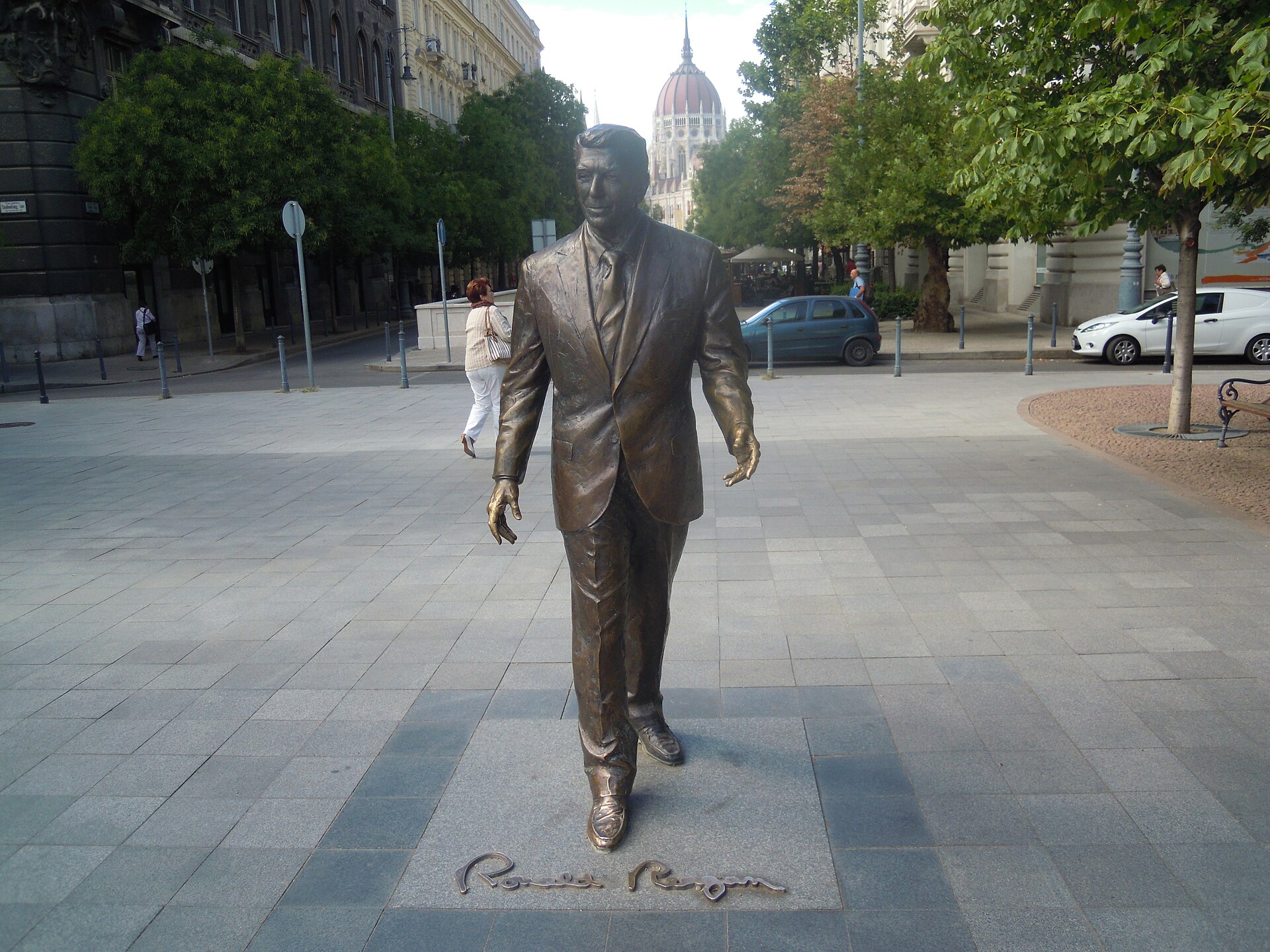
There is a corner of Budapest where the Cold War never quite ended, it just turned to bronze. On Szabadság tér, Liberty Square, a life-size Ronald Reagan walks forever across the grass, mid-stride, coat open, heading somewhere with purpose. The first question most people have is the one I had: why is the 40th president of the United States standing in the middle of Budapest at all?
The short answer is gratitude, the kind tied to a specific year. Hungarians credit Reagan with helping bring the Cold War to a close, and 1989 is the hinge. That spring Hungary began cutting down the electrified fence along its border with Austria, and in August the Pan-European Picnic near Sopron opened that border long enough for hundreds of East Germans to slip through to the West. It was the first real tear in the Iron Curtain. By November the Berlin Wall was down. When Hungary unveiled the statue in 2011, on the centennial of Reagan’s birth, the official message was nearly that blunt: he is honored for helping end the Cold War, and for the fact that Hungary regained its sovereignty in the process. Prime Minister Viktor Orbán and former US Secretary of State Condoleezza Rice spoke at the unveiling. The sculptor, István Máté, said he wanted to capture the ease Reagan had with people, so he put him in motion.
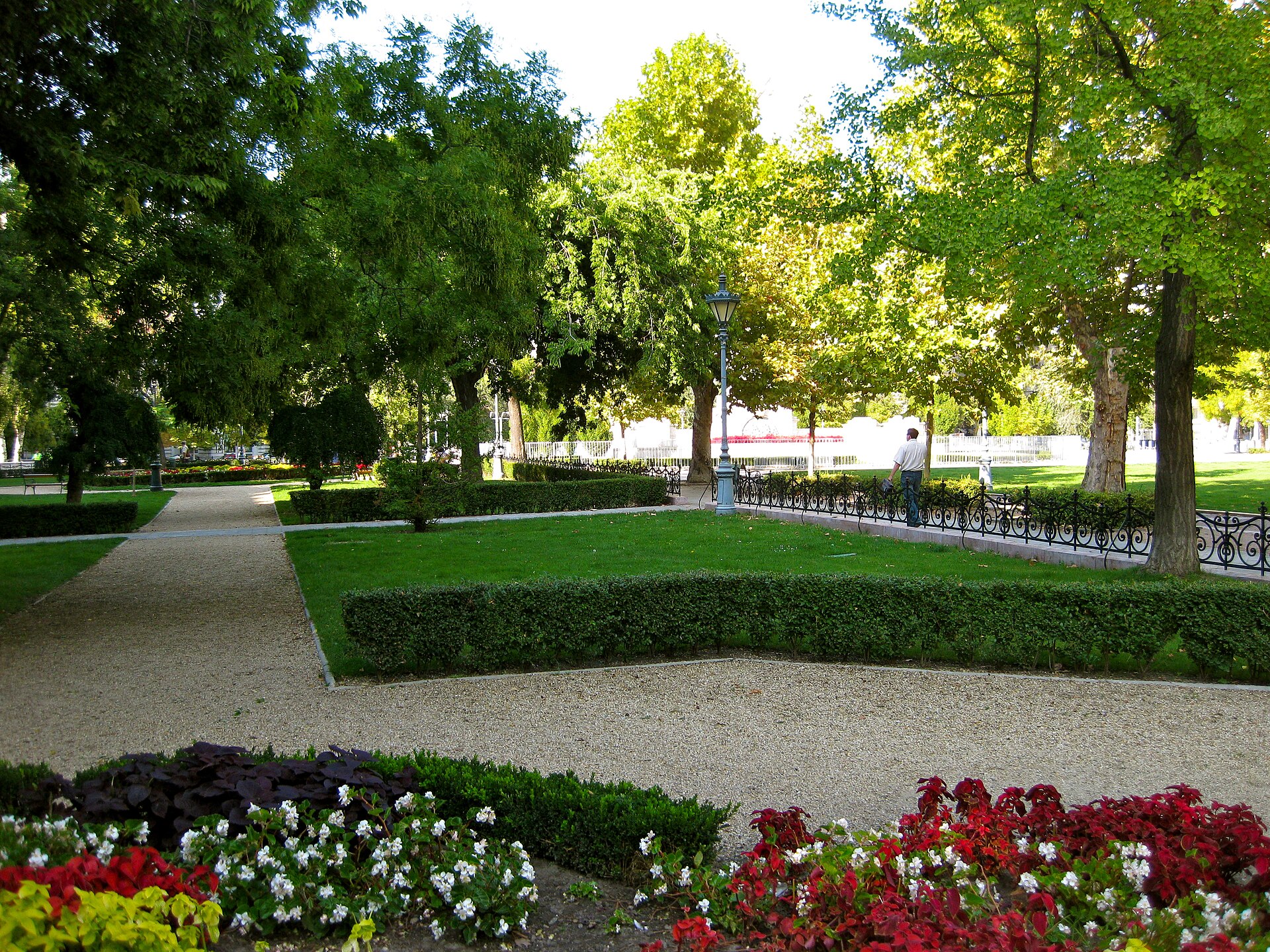
And where they put him is the whole point. Szabadság tér is one of the strangest squares in Europe because it holds both sides of that history at once. A short walk from Reagan stands a Soviet war memorial, a stone obelisk topped with a gilded star, raised in 1945 to the Red Army soldiers who died taking Budapest from Nazi Germany. It is the last major communist-era monument still standing in central Budapest, most of the others were carted off to a statue park on the edge of town after 1989. So the man credited with helping end Soviet domination is cast in bronze a stone’s throw from a monument to the Soviet army, walking past it, toward the United States Embassy on the far side of the square. In 2020 a statue of George H. W. Bush was added nearby, just to make the point twice.
That embassy is what sent me down the rabbit hole. Once you notice one, you start counting, and Budapest turns out to be packed with them. The city is home to somewhere around ninety embassies, ninety to ninety-three depending on who is counting, British, Kenyan, Japanese, American, scattered all over town. Which raises a question I had honestly never stopped to ask: what does an embassy actually do, and why does a country let dozens of foreign governments set up shop inside its capital?
The answer is simpler and older than I expected. An ambassador is one country’s voice inside another country, and the whole arrangement runs on a single agreement almost every nation on earth signed in Vienna in 1961, the Vienna Convention on Diplomatic Relations. The deal is mutual, not generous: you can send your people to my capital, I will send mine to yours, and neither of us will interfere with the other’s diplomats. Every country wants its own citizens and officials protected abroad, so everyone agrees to play by the same rules.
Once you start pulling on the thread, even the count gets slippery. That ninety-odd is only the countries with an actual building and a resident ambassador in town. Plenty of others are represented without one, because a country can skip the building and have a single ambassador, based in another capital, accredited to several states at once. Australia is the tidy example: it keeps no embassy in Budapest, only a consulate, and its ambassador sits in Vienna while covering five countries at the same time, Hungary among them since 2013, alongside Slovakia, Slovenia, Kosovo, and Bosnia and Herzegovina. One person, five flags. And then there is the strangest entry on the list. The Sovereign Military Order of Malta, a Catholic order recognized as a sovereign subject of international law yet holding no territory anywhere on earth, keeps a full embassy in Budapest’s Castle District, on Fortuna utca. An institution with no land of its own still gets an ambassador, which tells you what an embassy really stands for. Not territory. A relationship.
I know the everyday version of this because I have used it, just not at the American embassy. Years ago, working on a reforestation project, I needed a visa, and that meant a trip to the Brazilian Embassy. Here is the small coincidence that makes me laugh now: the Brazilian Embassy sits at Szabadság tér 7, on the very same square as the Reagan statue and the American mission. So my one real piece of embassy business in Budapest happened a few doors down from a bronze American president. That is what an embassy does on an ordinary day. It is part negotiator, part reporter, part emergency contact, the place where a lost passport, a hospital stay, an arrest, or a visa for a rainforest project gets sorted out.
The ambassadors themselves arrive with more ceremony than a Monday morning. A new ambassador to Hungary presents formal letters of credence to President Tamás Sulyok at Sándor Palace, and only after that is he or she officially recognized. No credentials, no job. Britain’s ambassador, Justin McKenzie Smith, took up the post in late 2025 and, to his credit, started learning Hungarian before he arrived, which anyone who has tried the language will tell you deserves real respect. The United States, my own country, is the odd one out at the moment. As of mid-2026 there is no confirmed American ambassador in Budapest. The embassy is run by a career diplomat serving as chargé d’affaires while a nominee waits, and waits, for the Senate. So the building Reagan is striding toward is, for now, running without an ambassador.
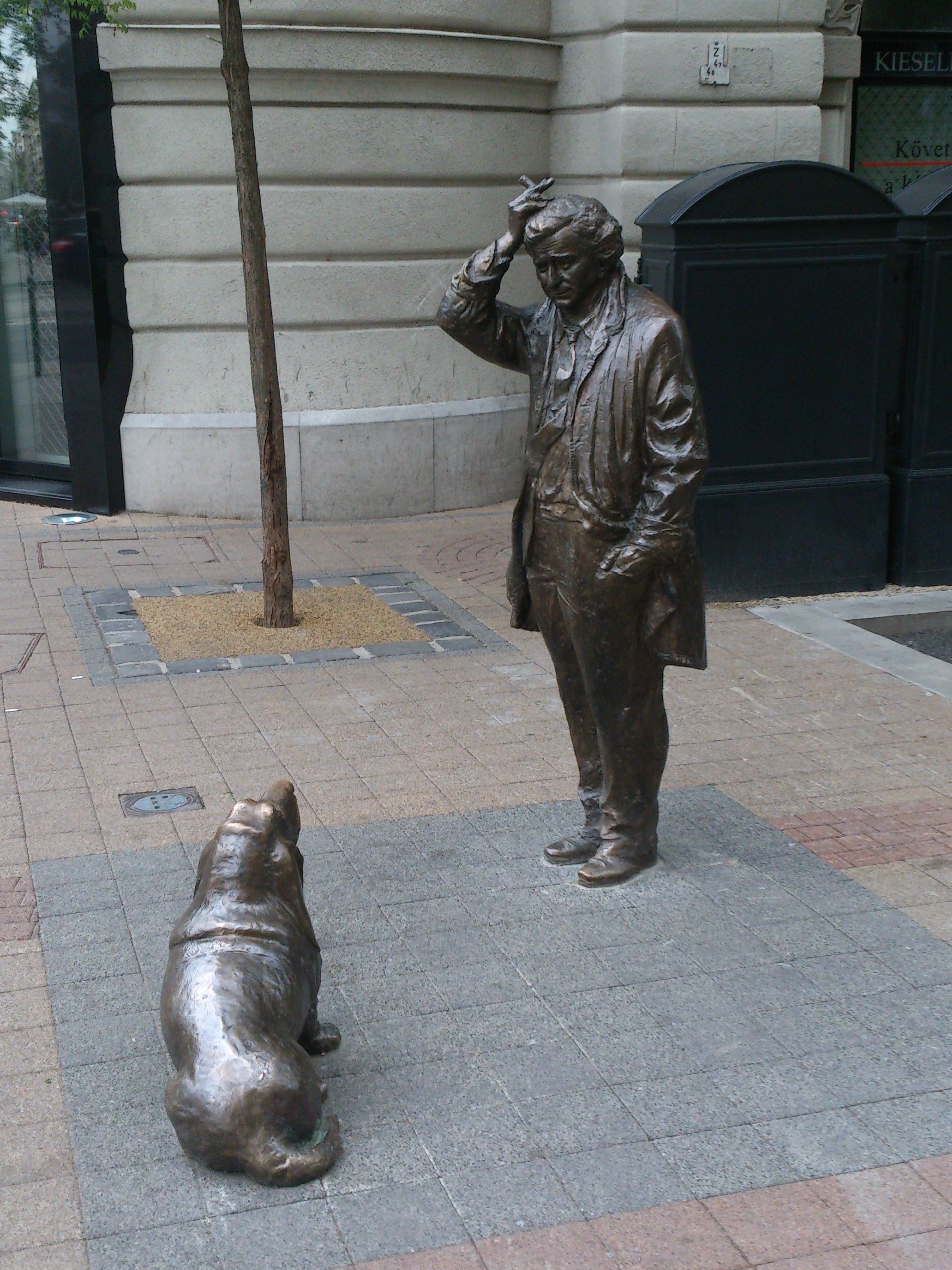
Budapest does not only do solemn, of course. The same walk turns up a bronze Lieutenant Columbo and his dog on Falk Miksa utca, a wink at Peter Falk that feels almost too perfect, even though the street’s name is a coincidence and not a family tree. A few minutes away, near the Basilica on Zrínyi utca, a portly bronze policeman has had his belly rubbed to a mirror shine by tourists chasing good luck. A city tells you what it values by who it puts on a pedestal, and Budapest keeps room for both the detective and the president.
But the Reagan statue is the one that is actually a piece of diplomacy. Stand on that square and you can see the whole machine in a single glance: a monument, a memorial, and a working embassy, three different ways one country keeps a conversation going inside another. Whether it is a statue, a visa window, or an ambassador presenting his credentials, the job comes down to the same thing. Keep talking. Trade, travel, cooperation, sometimes disagreement, but conversation all the same.
This video was produced in partnership with Daily News Hungary.

Fact Check
A few points from the video, checked against the record.
In The VideoRight now the United States doesn't have an ambassador in Hungary; the embassy is being run by a career diplomat named Caroline Savage while the current nominee waits for Senate confirmation.
Setting It StraightAccurate as of mid-2026. The nominee is Benjamin Landa, whose nomination has stalled in the Senate Foreign Relations Committee, returned once and re-submitted in January 2026, and remains unconfirmed. Caroline Savage continues as Chargé d'Affaires. This is the detail most likely to change after the video was filmed. Source
In The VideoWhen a new ambassador arrives, they present credentials to President Sulyok at Sándor Palace and lay a wreath at Heroes' Square.
Setting It StraightPresenting letters of credence to President Tamás Sulyok at Sándor Palace is correct and is the formal step. A wreath-laying at Heroes' Square is a customary courtesy for many visiting dignitaries, but it is not a fixed part of every ambassador's credentials ceremony. Source
Spot something off in this video?Suggest A Correction
Mentioned In This Video
Places
- Statue Of Ronald Reagan, BudapestBronze, mid-stride, unveiled in 2011 on Szabadság tér; sculptor István Máté.View Map
- Szabadság Tér (Liberty Square)The square that holds the Reagan statue, a Soviet war memorial, and the US Embassy together.View Map
- Embassy Of The United States, BudapestSzabadság tér 12, the building the Reagan statue strides toward.View Map
- Columbo StatuePeter Falk as Lieutenant Columbo with his dog, on Falk Miksa utca; erected 2014.View Map
- The Fat Policeman (Kövér Rendőr)On Zrínyi utca near St. Stephen's Basilica; tradition says rub the belly for luck.View Map
- Sovereign Military Order Of Malta In HungaryA sovereign entity with no territory that keeps an embassy in Budapest's Castle District; relations first established 1925, resumed at ambassadorial level in 1990.View Map
People
- Tamás Sulyok, President Of HungaryReceives ambassadors' letters of credence at Sándor Palace.
- Justin McKenzie Smith, UK Ambassador To HungaryTook up the post in October 2025; began learning Hungarian before arriving.
Businesses
- Daily News HungaryThis video was produced in partnership with Daily News Hungary.
Sources & References
- Vienna Convention On Diplomatic RelationsThe 1961 treaty that sets the rules for embassies and diplomats worldwide.
- US Ambassador Nomination (Benjamin Landa)As of mid-2026 the US ambassador post in Budapest is vacant; the nominee awaits Senate confirmation.
- Concurrent (Non-Resident) AccreditationHow one ambassador can represent several countries at once; Australia covers Hungary from Vienna alongside four other states.
Want The Full Transcript?
Get a clean, printable PDF of this video's transcript. Drop your email and we'll send it over.

Share This Story
Point a phone camera at the code to open this page, or download it to share anywhere.
Download QRWhat In This Story Connects With Your Own Experience Of Hungary?
Tell Ray
Share Or Use This Story
Pass It On. Give It A New Audience.
Share the link with someone who would enjoy it, or use the cover and suggested caption to introduce the story.
Get The Cover And Caption
 Download Landscape Cover ↓Request Permission To Republish →
Sharing a link is welcome. Republishing the article, video, or images requires permission.


_9366145041.jpg)

