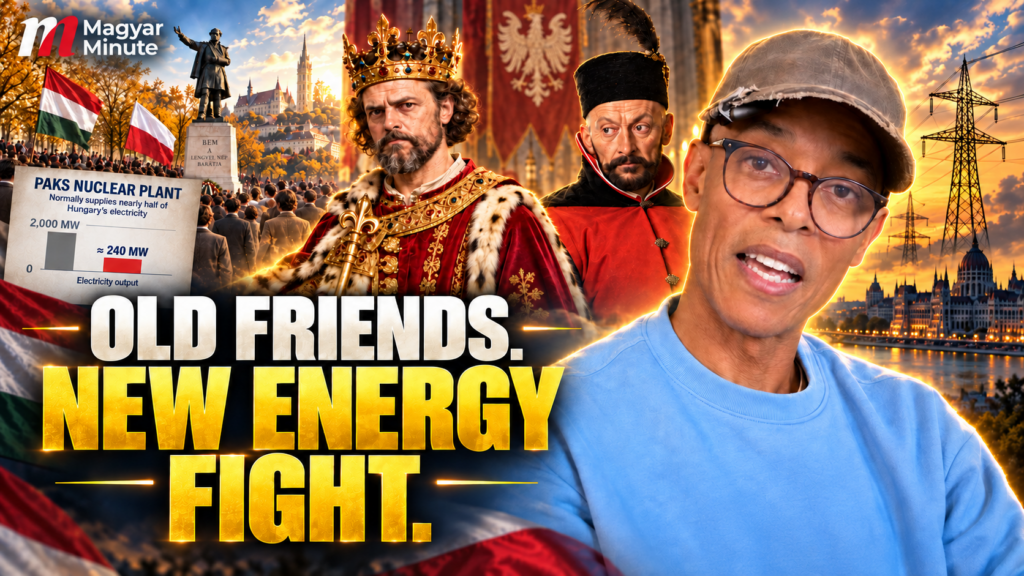
Hungary Just Ended 16 Years Of Orbán In One Election
In April 2026, Péter Magyar's Tisza Party ended sixteen years of Viktor Orbán in a landslide. What it actually changes, from the frozen EU billions to Hungary's place in Europe, and why it is only the beginning.
Notes
For sixteen years, one outcome in Hungarian politics felt fixed. Viktor Orbán’s Fidesz had won four elections in a row, each time with a supermajority. On April 12, 2026, that ended. Péter Magyar’s Tisza Party took roughly 138 of the 199 seats in the National Assembly on about 54 percent of the vote, and Orbán conceded the same night. It was not a narrow shift. It was a landslide, and the first national defeat of Orbán’s modern era.
Tisza is a relative newcomer, a centre-right, pro-European party that ran on anti-corruption and rule-of-law reform. Magyar, a former insider who broke with the governing camp, built the campaign around a single promise: change the system from the inside. Whether that promise survives contact with the machinery it inherited is the open question. Promising reform during a campaign and executing it inside institutions built to resist change are two very different jobs.
The stakes are easiest to see in money. Brussels had frozen roughly 36 billion euros earmarked for Hungary, tied up over rule-of-law concerns: judicial independence, public procurement, conflicts of interest. That freeze was not an opinion. It was on the record, and it shaped what any new government could realistically do. Unlocking it was always going to be the first real test of whether reform from the inside meant anything in practice.
That test arrived quickly. Since this video was filmed, there has been concrete movement: on May 29, 2026, the European Commission announced the release of more than 16 billion euros to Hungary, conditioned on the reforms now underway. An early signal, not a finish line, but a real one.
None of this stays inside Hungary’s borders. The country sits inside the European Union, and a government that swings from years of friction with Brussels toward cooperation changes the math for the whole bloc. What happens here gets read elsewhere as either a model or a warning: proof that an entrenched system can be voted out and reformed, or a cautionary tale about how hard the second part is.
The honest read is that this is a beginning, not an ending. Handing one party that much power is itself a decision whose consequences take years to show. The election answered one question and opened a dozen more. Worth watching closely.

Fact Check
A few points from the video, checked against the record.
In The VideoYou point to billions in frozen EU funds and treat it as an open question whether the new government can actually unlock them ("whether he can deliver is a different conversation").
Setting It StraightThat was accurate when you filmed in mid-April. It has since started to move: on May 29, 2026 the European Commission announced releasing over €16 billion to Hungary, tied to reform conditions. So the "can he unlock it?" question you raised is now partly answered. Source
Spot something off in this video?Suggest A Correction
Mentioned In This Video
People
- Péter MagyarFormer government insider whose Tisza Party won the April 2026 election.
- Viktor OrbánPrime minister since 2010; conceded defeat in 2026 after four supermajority wins.
Sources & References
- 2026 Hungarian Parliamentary ElectionFull results and background.
- EU Funds Released To Hungary (May 2026)Reporting on the rule-of-law conditions behind the frozen and released funds.
Also Mentioned
- Tisza PartyCentre-right, pro-European party that ran on anti-corruption and rule-of-law reform.
Want The Full Transcript?
Get a clean, printable PDF of this video's transcript. Drop your email and we'll send it over.

Share This Story
Point a phone camera at the code to open this page, or download it to share anywhere.
Download QRWhat In This Story Connects With Your Own Experience Of Hungary?
Tell Ray
Share Or Use This Story
Pass It On. Give It A New Audience.
Share the link with someone who would enjoy it, or use the cover and suggested caption to introduce the story.
Get The Cover And Caption
 Download Landscape Cover ↓Request Permission To Republish →
Sharing a link is welcome. Republishing the article, video, or images requires permission.