Why Hungary Shuts Down On May 1 (And America Doesn’t)
May 1 brings Hungary to a standstill. Munka ünnepe is really three holidays stacked on one date: a medieval spring rite, a communist showpiece, and the open, ideology-free festival that outlasted them both.
Újbuda (District XI), Budapest
Notes
The first sign that something was off was the quiet. In my corner of the 11th district the shops were dark, the bakery shutters were down, and a city that normally hums was holding its breath. The notice taped to a door was in Hungarian, and once I worked out the date everything made sense: May 1, Munka ünnepe, Labor Day. What I did not expect was how much history was folded into one silent morning.
Here is the thing an American notices first: we sit this one out. Most of the world honors workers on May 1, and the United States pointedly does not. That was a decision, not an accident. After the Haymarket affair in Chicago in 1886 turned May 1 into the rallying date of the international labor movement, the September holiday Americans know was promoted as a safer alternative, one that would not double as a memorial to Haymarket or lend energy to the socialists and anarchists who had claimed the day. President Grover Cleveland signed it into federal law in 1894. So the reason I was at my laptop while half the planet had the day off traces back to a deliberate choice to look the other way.
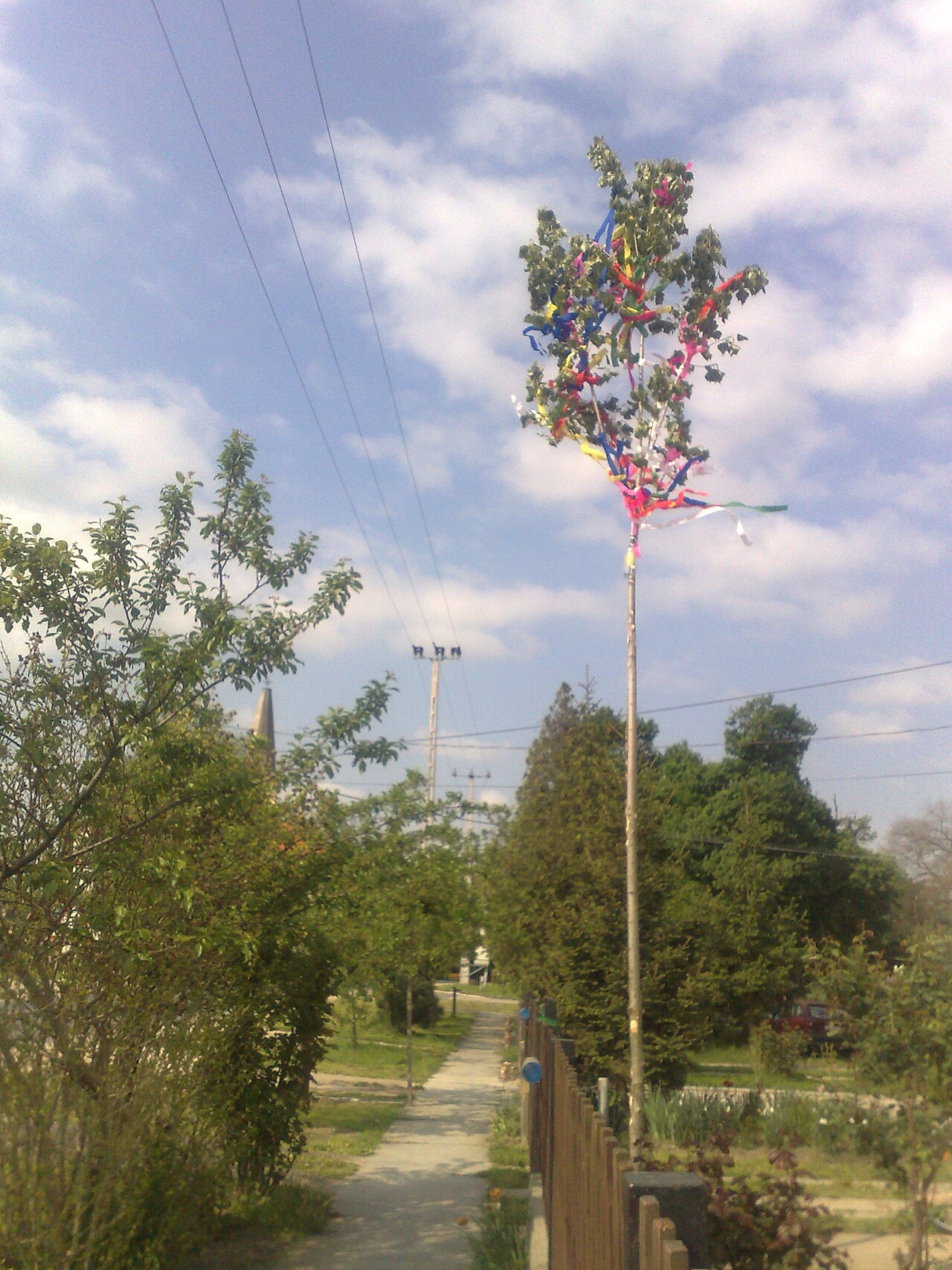
In Hungary the day points the opposite direction, and it holds more than one meaning at once. The oldest layer has nothing to do with labor. It is a spring rite, and its emblem is the májusfa, the maypole, recorded here since at least 1502. On the night before May 1, young men would cut a tall tree, strip the trunk, leave a crown of green at the top, and hang it with ribbons and a bottle near the peak. They raised it in front of the house of a girl they were courting. The pole was half spring symbol, half love letter, a way to say something out loud without speaking.
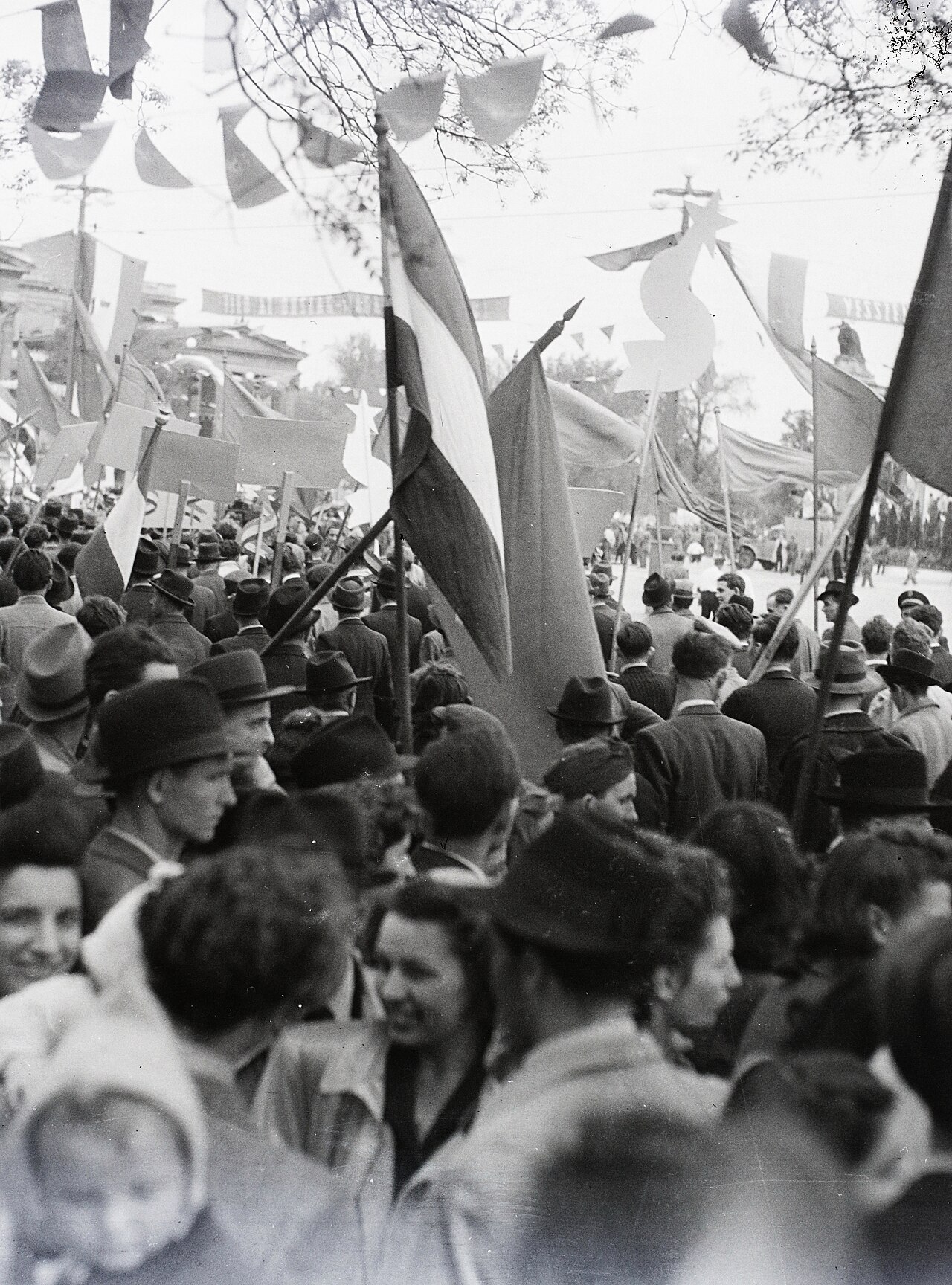
The second layer is the one most outsiders picture. May 1 became a workers’ day in Budapest in 1890, when tens of thousands marched behind banners reading 8-8-8: eight hours of work, eight of rest, eight that belong to you. It became an official state holiday in 1946, and under communism it hardened into a showcase: columns of factory workers, military hardware down the avenue, officials watching from a platform. The regime even paved over a slice of Városliget, the City Park, to build a parade ground. The same grass that had hosted spring picnics since the 1850s became a stage for the state.
Then came 1989, and the third layer. Communism fell, and Hungary did something quietly telling: it kept the day and discarded the message. No more compulsory parades, no ideology, just the day off. What returned was the oldest thing of all. A majális today is a spring outing: families spread across the parks, kolbász on the grill, beer in plastic cups, kids underfoot, music drifting over the grass. It is close to what villagers were doing six centuries ago, only with better speakers.
That is what caught me about May 1 here. It is not one holiday in three costumes. It is three different Hungaries stacked on a single date, and you can still find the seams if you know where to look: the pagan spring at the bottom, the century of labor and the heavy hand of the state pressed on top, and the easy, unforced festival that outlived all of it. For one day the date belongs to nobody in particular, and to everybody who walks out into the park.
Fact Check
A few points from the video, checked against the record.
In The VideoAmerican politicians moved Labor Day off May 1 in the 1880s to keep workers from the international socialist movement.
Setting It StraightThe instinct is right, the timing is a little later. After the 1886 Haymarket affair in Chicago made May 1 the international labor day, US leaders pushed a separate September holiday so it would not become a Haymarket memorial. President Grover Cleveland signed it into federal law in 1894. Source
In The VideoHungarians have celebrated this spring day since at least the 1400s.
Setting It StraightVery close. The Hungarian maypole (májusfa) is documented from at least 1502, and the spring rite behind it reaches back into older pre-Christian custom. Source
In The VideoThe communists arrived and hijacked May 1 in 1946.
Setting It StraightMay 1 was already a workers' day in Budapest from 1890, when tens of thousands first marched. 1946 is when it became an official state holiday, which the communist era then turned into the mandatory parades. Source
Spot something off in this video?Suggest A Correction
Mentioned In This Video
Places
- Városliget (City Park)Budapest's Majális heart since 1857. Part of it was paved into a communist parade square in 1951, the same ground in two very different uses.View Map
- Memento ParkWhere Budapest exiled its communist statues after 1989, including the icons that once presided over May Day. The ideology, relocated.View Map
Sources & References
- International Workers' DayThe global workers' holiday on May 1, born of the 1880s eight-hour-day movement. Most of the world observes it; the US is the notable exception.
- The Haymarket AffairThe 1886 Chicago labor protest and bombing that made May 1 the international labor date, and pushed the US toward a separate September holiday.
- Labor Day (United States)President Grover Cleveland signed the September holiday into federal law in 1894, deliberately set apart from May 1.
Related Links
- Májusfa, The Hungarian MaypoleDocumented in Hungary since at least 1502: a stripped, ribboned spring tree raised in front of a sweetheart's house.
Want The Full Transcript?
Get a clean, printable PDF of this video's transcript. Drop your email and we'll send it over.

Share This Story
Point a phone camera at the code to open this page, or download it to share anywhere.
Download QRWhich Hungarian Tradition Or Piece Of Local History Should I Explore Next?
Tell Ray
Share Or Use This Story
Pass It On. Give It A New Audience.
Share the link with someone who would enjoy it, or use the cover and suggested caption to introduce the story.
Get The Cover And Caption
 Download Landscape Cover ↓Request Permission To Republish →
Sharing a link is welcome. Republishing the article, video, or images requires permission.