
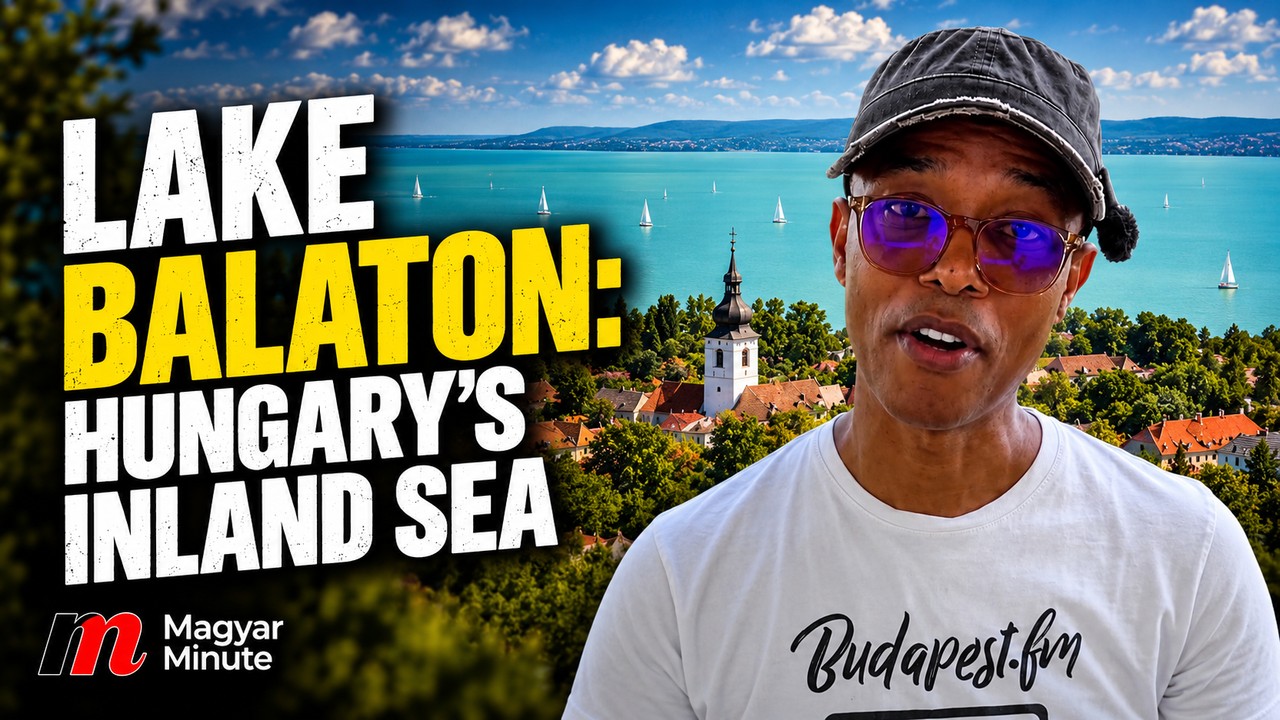
Lake Balaton: Hungary’s Inland Sea, And What Waits Beyond Budapest
Hungary is landlocked, so it made a sea of its own. A closer look at Lake Balaton: the volcanic wine shore, the Cold War summers that quietly reunited a divided Germany, and the slower pace that makes the trip out of Budapest worth it.
Notes
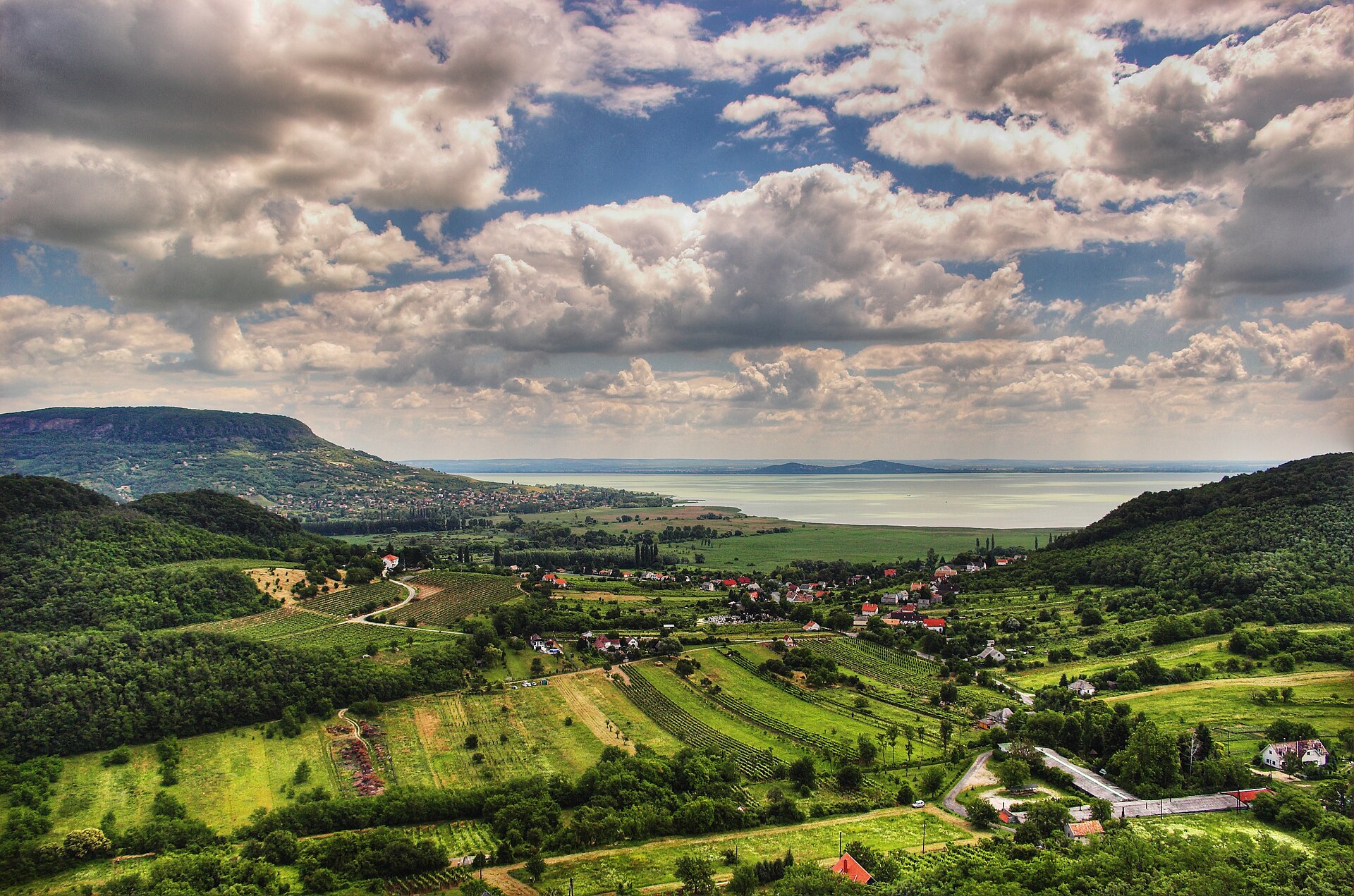
Hungary has no coastline. What it has is Balaton, and for generations that has been enough. Locals call it a tenger, the sea, and standing on the shore at Balatonalmádi the word stops sounding like a joke. The far side dissolves into haze, sailboats lean against the horizon, and for a landlocked country this is the ocean.
It is the largest lake in Central Europe, roughly 77 kilometers end to end, and almost startlingly shallow: about 3.3 meters on average, and only around 12.5 meters at its deepest, in the narrow strait beside the Tihany Peninsula. That shallowness is the whole personality of the place. The water warms to swimming temperature fast in summer, near 25 degrees, and in a hard winter it can freeze thick enough to walk on.
The lake is younger than it looks. The basin is old, but the water you see only gathered here around fifteen thousand years ago, at the end of the last Ice Age, when a chain of smaller shallow lakes slowly joined as the ridges between them wore down. Tihany is one of those ridges that never went under, a knuckle of volcanic rock still standing above the water with an abbey on its crown.
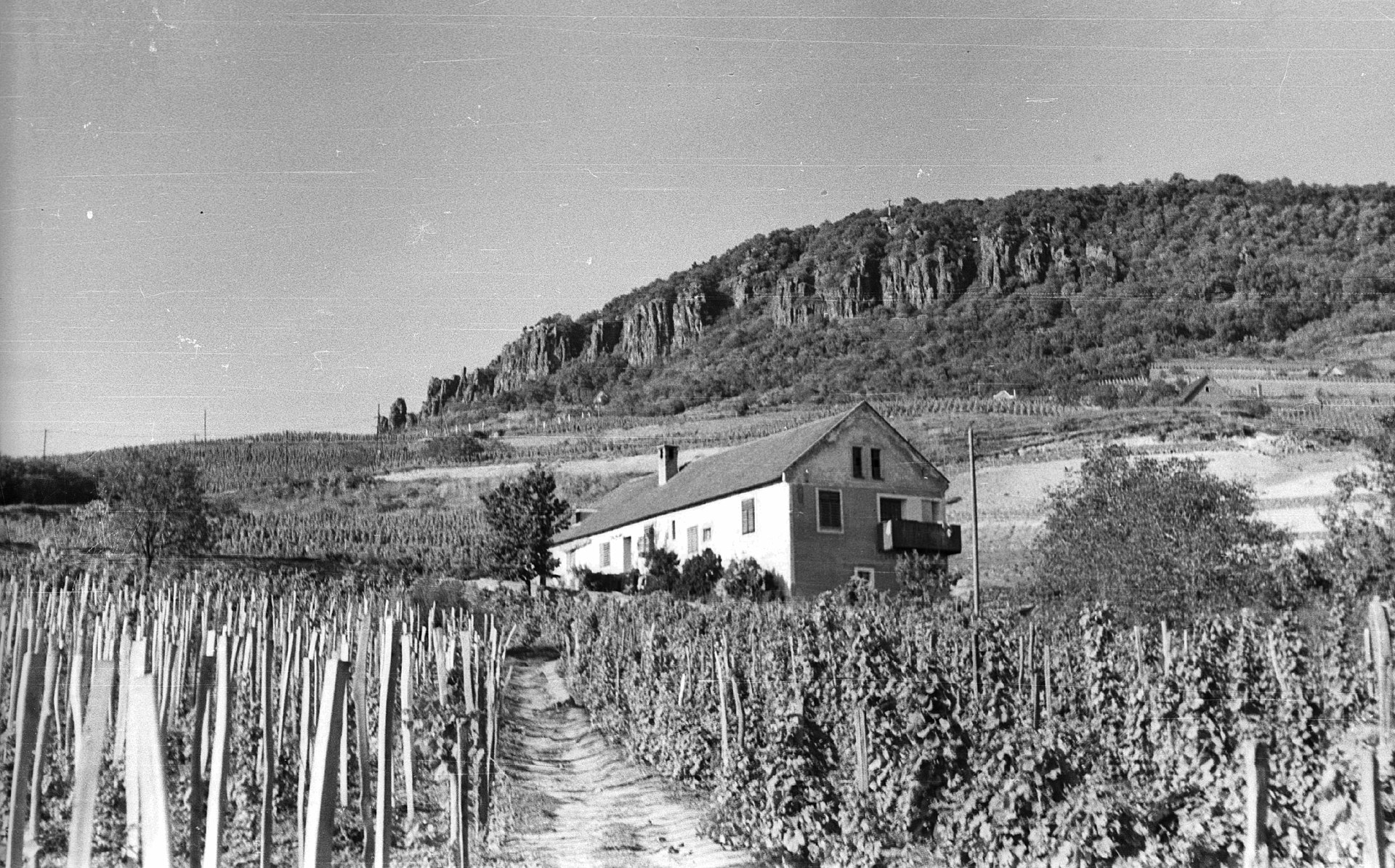
That volcanic past keeps paying off on the north shore. Around Badacsony the flat-topped hills are the worn stumps of extinct volcanoes, and the basalt soil grows some of Hungary’s sharpest white wine: Olaszrizling, and the rare local Kéknyelű. You can taste the geology, which sounds like marketing until you are sitting on a hillside with a glass and the lake going gold below you.
Balaton has always been a place people retreat to, and the layers run deep. Romans built on the southwest shore, Ottoman and Habsburg history washed across it, but the strangest chapter is the most recent. Through the Cold War, Balaton was one of the only places a divided Germany could come back together. East Germans were allowed to holiday in Hungary, West Germans could travel there too, and so every summer families split by the Berlin Wall met on these beaches. It was never a formal neutral zone, just a rare common ground, and in the summer of 1989 the pressure that gathered around this lake and the nearby border helped crack the Wall open by autumn.
None of that is why my son will remember it. He will remember his first Gundel palacsinta, the Hungarian pancake folded around walnuts and chocolate, and the face he made at the first bite, which I would frame if I could. He will remember dancing, with no self-consciousness whatsoever, to the Sárik Péter Trió playing an outdoor set downtown. We were in Balatonalmádi because his godmother keeps a place there, and the town earns its quiet: no big chain hotels, no neon, about eight and a half thousand people and the good sense not to grow.
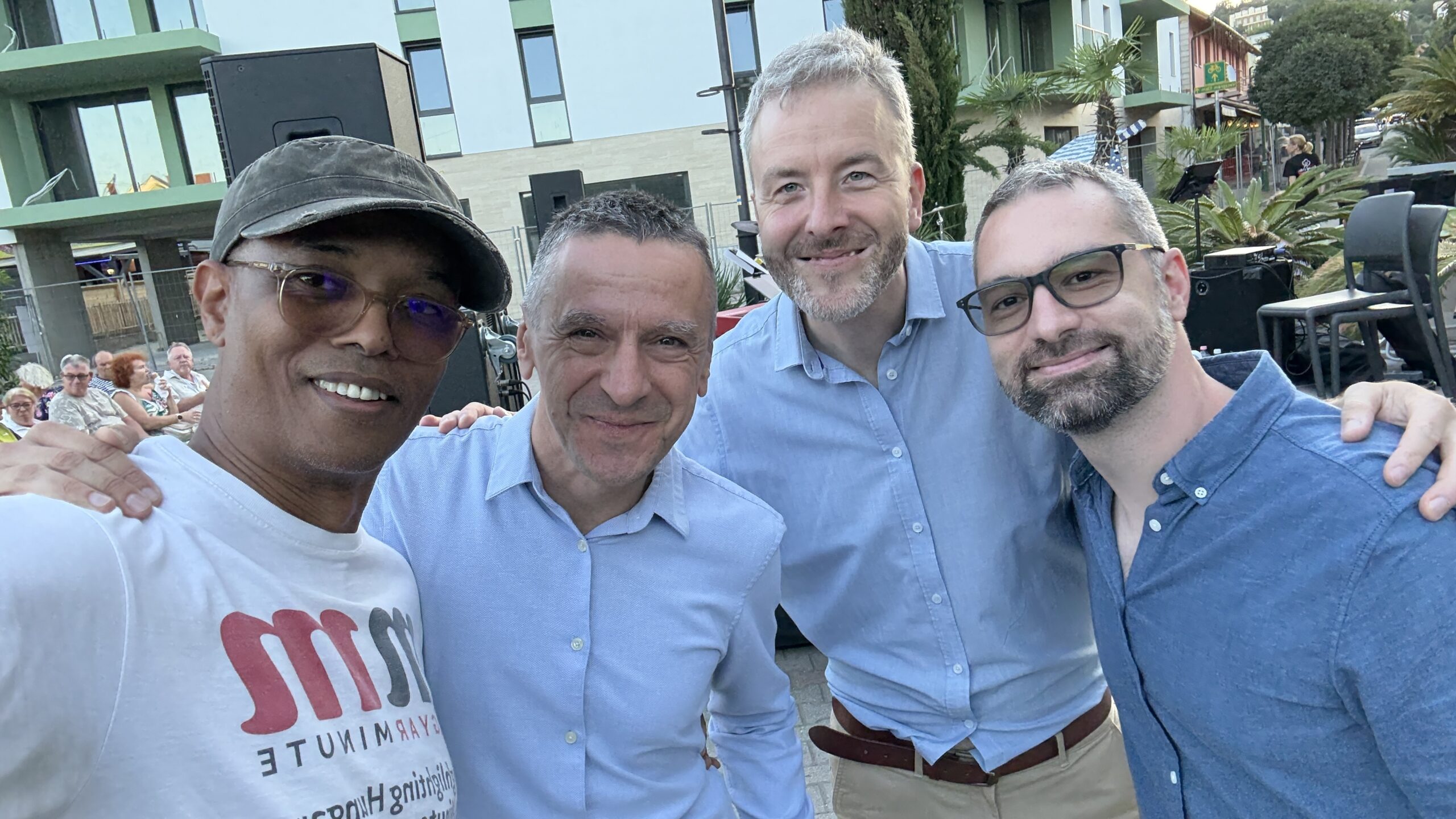
What you notice first, coming from the city, is what is missing. No sirens. More green. Less traffic. People walk slower because there is nowhere they urgently need to be. Across the water sit the spa towns, Balatonfüred with its reform-era elegance and Hévíz with the largest swimmable thermal lake in the world. Down the south shore is festival country that has pulled crowds in the hundred-thousands. The lake holds all of it at once, the party and the silence, the history and the ice cream.
So yes, see Budapest. It is one of the great cities. But it is not the whole story, and Hungary knows it. The country tips west toward this shallow gray-blue sea every summer for a reason. Come out here. Let the air slow you down. Let the lake do the talking.


Fact Check
A few points from the video, checked against the record.
In The VideoThe deepest point is just over 12 meters, or about 14 feet.
Setting It StraightThe 12-meter figure is right: Balaton bottoms out around 12.5 meters in the strait by Tihany. But that is roughly 41 feet, not 14. Fourteen feet would be about 4 meters, closer to the lake's average depth. Source
In The VideoThe lake formed less than one million years ago when five smaller lakes merged.
Setting It StraightThe merging-lakes part is right. But the lake is far younger than that: the basin is old, yet the water itself only gathered here around 15,000 to 17,000 years ago, at the end of the last Ice Age. Source
In The VideoA low-key neutral zone where East Germans, West Germans, and Hungarians could all gather.
Setting It StraightBalaton was not a formal neutral zone. It was an Eastern Bloc resort that happened to be one of the only places East and West Germans could meet, which made it a rare common ground. That came to a head in the summer of 1989 and helped lead to the fall of the Berlin Wall. Source
In The VideoFurther south hosts Balaton Sound, one of Europe's biggest electronic-music festivals, up to 170,000 people.
Setting It StraightTrue when this was filmed: Zamárdi, on the south shore, drew a record of about 172,000 in 2019. But Zamárdi announced it would stop hosting Balaton Sound from 2025, so the festival's home is changing. Source
Spot something off in this video?Suggest A Correction
Mentioned In This Video
Places
- Lake BalatonThe largest lake in Central Europe, Hungary's inland sea.View Map
- BalatonalmádiThe quiet north-shore town this was filmed in.View Map
- Tihany PeninsulaVolcanic peninsula with an abbey founded in 1055, near the lake's deepest point.View Map
- BalatonfüredHistoric north-shore spa town.View Map
- HévízHome to the world's largest swimmable thermal lake.View Map
People
- Sárik Péter TrióHungarian jazz group; played the outdoor set my son danced to.
Sources & References
- Lake LadogaEurope's largest lake, for scale.
Related Links
- Balaton SoundMajor electronic-music festival on the south shore (Zamárdi).
- Balaton Cross-SwimThe 5.2 km Révfülöp to Balatonboglár crossing.
Want The Full Transcript?
Get a clean, printable PDF of this video's transcript. Drop your email and we'll send it over.

Share This Story
Point a phone camera at the code to open this page, or download it to share anywhere.
Download QRWhat Has Raising A Family In Hungary Taught You?
Tell Ray
Share Or Use This Story
Pass It On. Give It A New Audience.
Share the link with someone who would enjoy it, or use the cover and suggested caption to introduce the story.
Get The Cover And Caption
 Download Landscape Cover ↓Request Permission To Republish →
Sharing a link is welcome. Republishing the article, video, or images requires permission.