Budapest’s Hidden Mini-Statues: The Secret Bronze World Of Mihály Kolodko
They are barely the size of your hand, tucked onto railings and staircases across the city, and most people walk right past them. Once you spot your first Mihály Kolodko mini-statue, Budapest never quite looks the same.
Notes
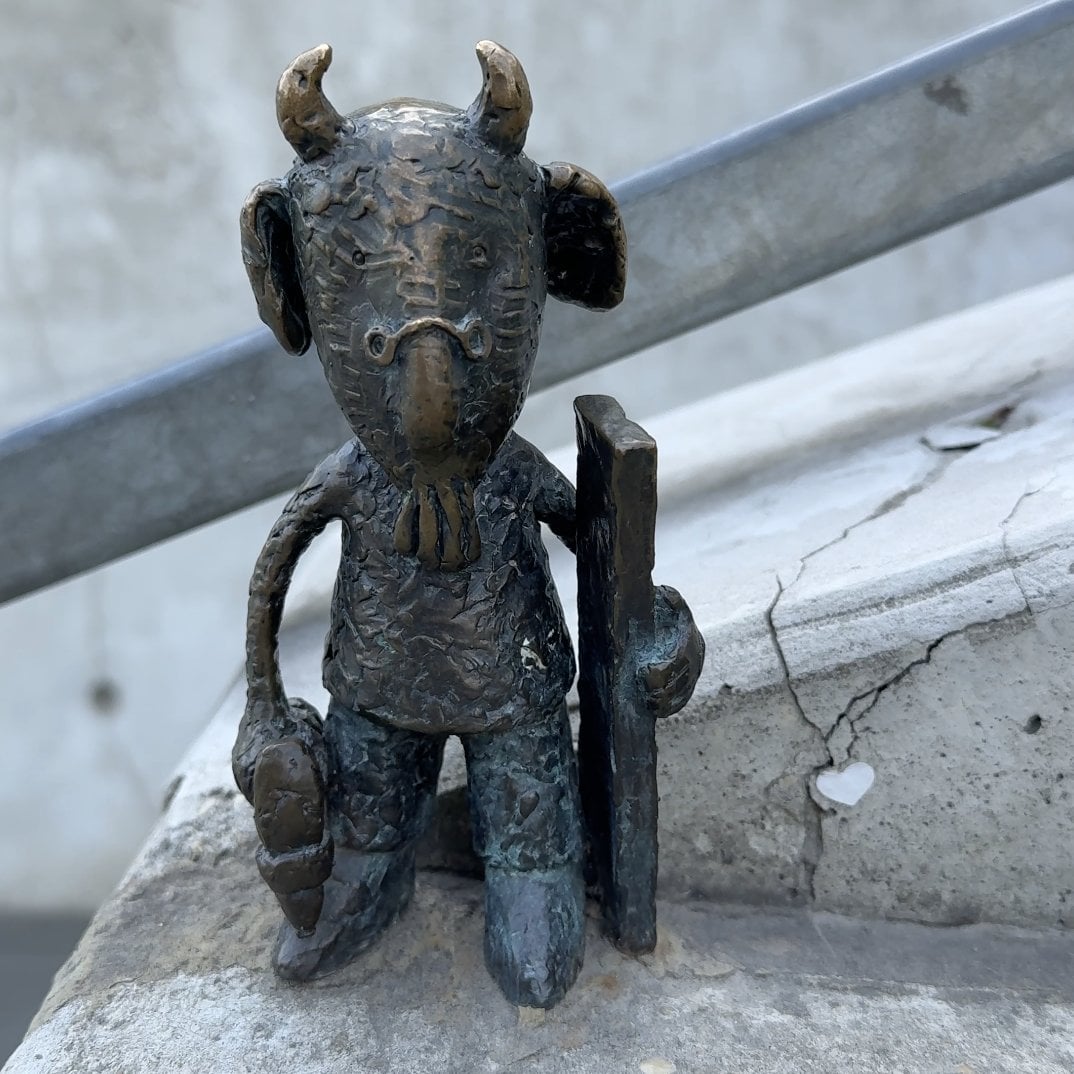
At the foot of the steps that climb out of Széll Kálmán tér, where the M2 empties out and the trams come through one after another, there is a goat. He is about the size of a coffee cup, cast in bronze, an electric screwdriver in one hand and a battered sign in the other. Thousands of people pass him every hour. Almost nobody looks down.
The goat is Mekk Elek, the hopeless handyman from a 1970s Hungarian cartoon, and he is one of dozens of small bronze secrets that have been quietly turning up across Budapest for nearly a decade. I did not find him because anyone pointed him out. I found him the only way you can. I was walking.
I have never owned a car in Hungary. Coming from Los Angeles, where the car is practically a body part, that still sounds strange when I say it out loud. But Budapest rewards people on foot, and I treat almost every walk like a workout. I am the guy walking up the escalator while everyone else stands. I take the staircases in the castle district instead of going around them. Somewhere in all that climbing, I started noticing things at my feet.
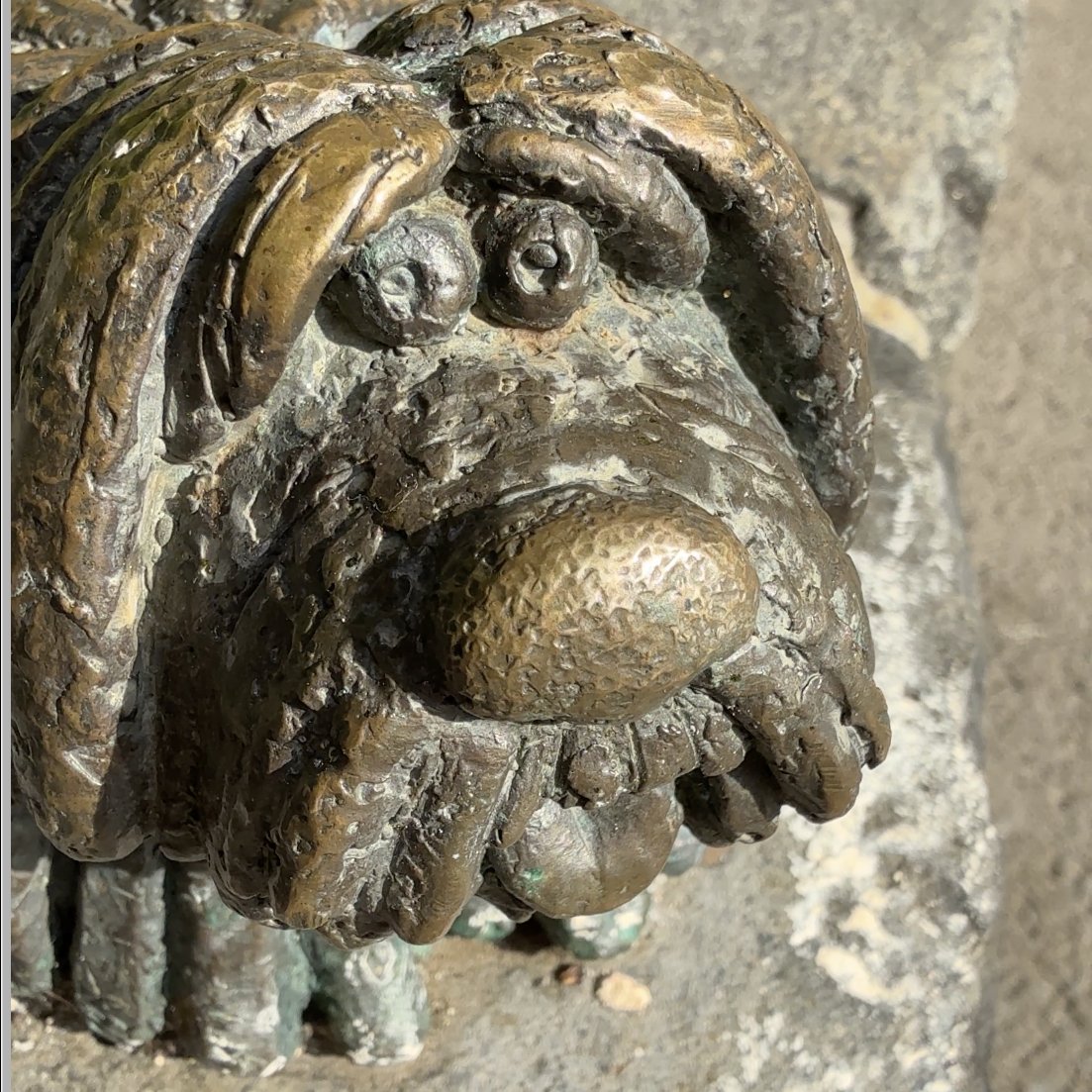
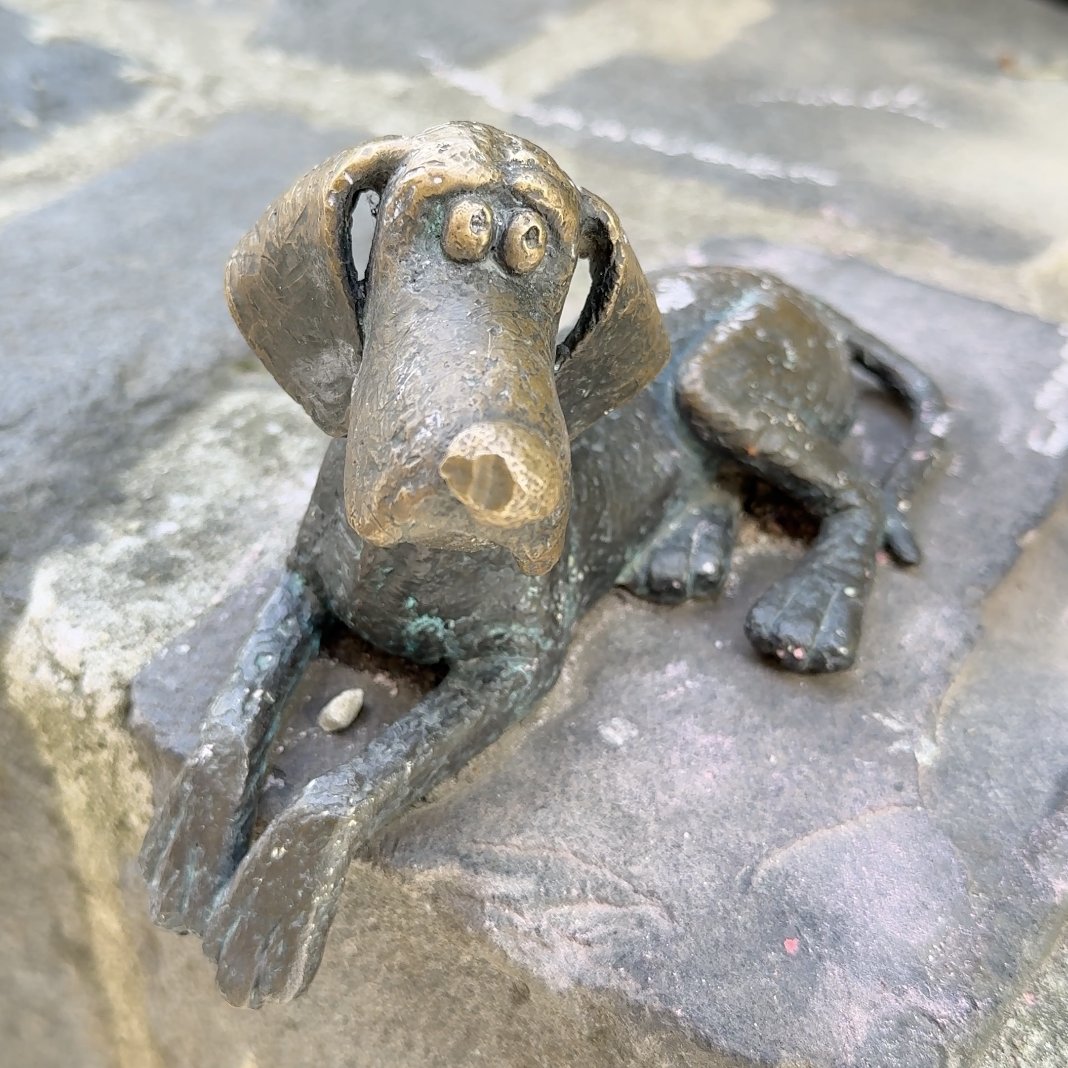
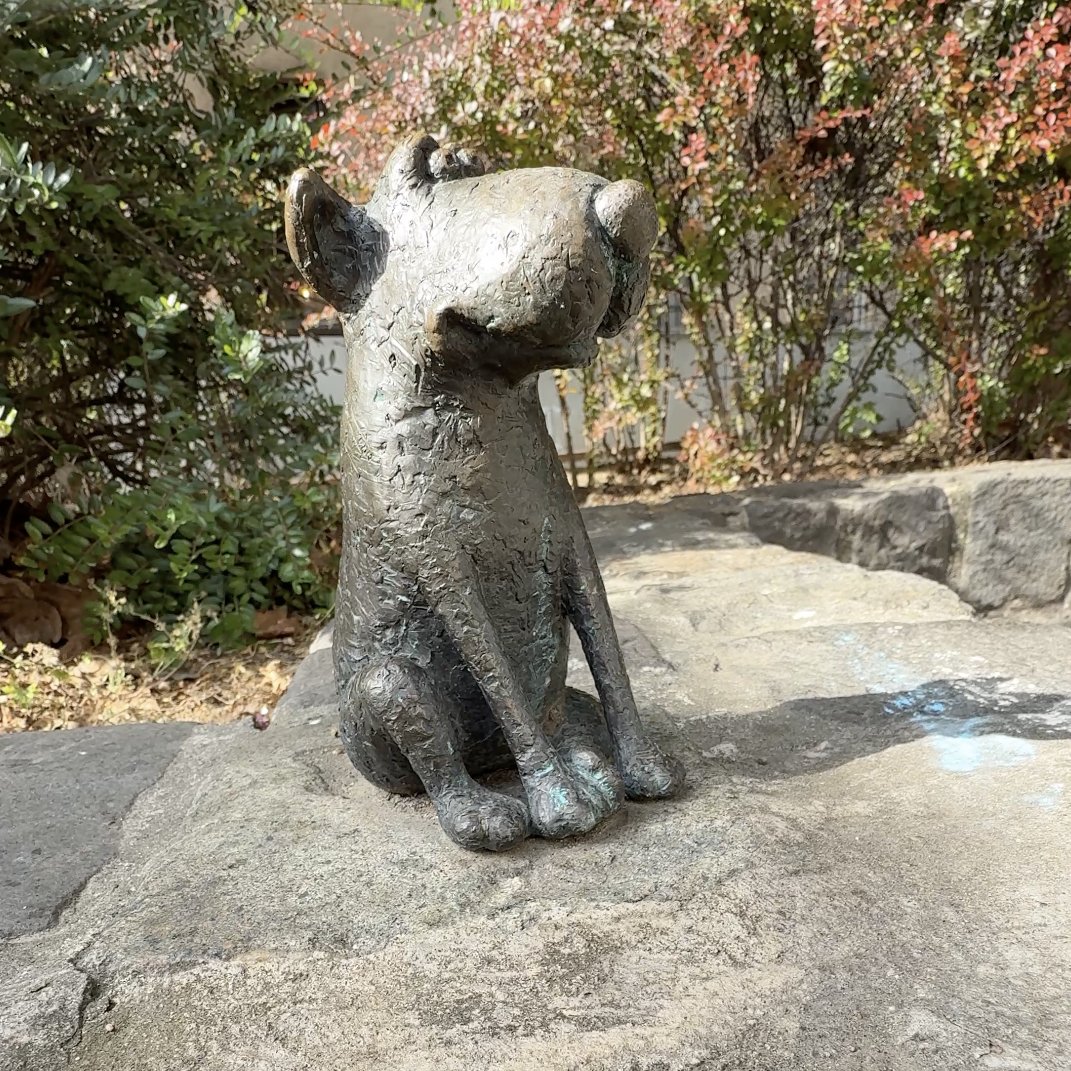
The first statue feels like a fluke. The second makes you suspicious. By the third you are crouched on a sidewalk photographing something the size of your palm while strangers step around you. Over in the first district I found a little pack of bronze dogs near Batthyány utca, a wink at an old Buda folk tale about a dog fair and a king who went around in disguise. One of them is a droopy-eared vizsla stretched out flat on the stone, looking very pleased with himself. Each find felt less like sightseeing and more like being let in on something.
The man behind them is Mihály Kolodko, and the first surprise is that he is alive, well, and still working. These are not relics from some lost century. Kolodko was born in 1978 in Ungvár, the Hungarian name for Uzhhorod, just across today’s border in Ukraine, and he trained as a monumental sculptor. The big stuff. The figures that stand in public squares and tower over everyone who walks past.
Then he went the other way. In the post-Soviet years the steady demand for giant state monuments had dried up, and he grew tired of waiting for the next big commission. As he has described it, once he had an idea, a good spot, and enough money for a kilo or two of bronze, he simply made the piece and put it out himself. His first miniature appeared back home in Uzhhorod in 2010. The Budapest series started in late 2016 with a tiny cartoon worm on the Buda embankment, and it has grown to somewhere around forty or fifty pieces since.
Most of them went up without anyone’s permission, and that is the part the press loves. It is why he keeps getting called Budapest’s answer to Banksy. The comparison is not really about style. It is about method. No gallery opening, no ribbon, no plaque. The work simply appears one morning and the city is left to find it.
Coming from the creative world myself, that is the choice I keep turning over. Most public art is built to grab you. It is loud on purpose. Kolodko trained to make exactly that kind of art, and then chose the opposite. His sculptures do not shout across the street. They whisper from a railing or a ledge, and because you have to find them, they end up feeling like they belong to you. He has said the message can stay monumental even when the object is tiny, and standing over that ridiculous little goat, screwdriver in hand, I believe him.
That is the real trick of these things. They are not just cute objects to tick off a list. They change how you move through the city. They make you slow down, look closer, and wonder what else you have been walking past for years. The more I look, the more Budapest seems willing to show me.
So now I am the one asking. How many have you found? Which one is your favorite? And which should I go looking for next?
Fact Check
A few points from the video, checked against the record.
In The VideoAfter the Soviet era ended there was no longer demand for massive monuments, so Kolodko went the opposite direction and started making miniatures.
Setting It StraightThe motive is right but the timing is compressed. Kolodko was born in 1978, so he was a child when the Soviet Union fell in 1991, and he did not graduate as a sculptor until 2002. His first miniature did not appear until 2010, in his hometown of Uzhhorod, with the Budapest series following in late 2016. So it was less an overnight pivot the moment the era ended and more a choice he made years later, in a post-Soviet art world where the big state commissions had dried up and he preferred to work on his own terms. Source
In The VideoIn the video the sculptor is compared to a street artist, but on camera the name comes out as "Bansky."
Setting It StraightThe name is Banksy, with the k before the s. The comparison itself is a fair one, and one the press makes too, the name just landed slightly off in the recording. Source
Spot something off in this video?Suggest A Correction
Mentioned In This Video
Places
- Egyszer Volt Budán Kutyavásár, The Bronze DogsKolodko's little pack of dogs near Batthyány utca in District 1, a nod to an old Buda folk tale tied to King Matthias.View Map
- Mekk Elek At Széll Kálmán TérThe bumbling cartoon-goat handyman, tinkering at the foot of the steps out of the square.View Map
- Uzhhorod (Ungvár)Kolodko's hometown in Transcarpathia, where his first miniature appeared in 2010.View Map
People
- Mihály KolodkoThe sculptor behind Budapest's hidden bronze miniatures. Born in 1978 in Uzhhorod and trained as a monumental sculptor.
Sources & References
- Budapest's Banksy Disciple (France 24)On why the press keeps comparing Kolodko's unannounced street placements to Banksy.
Related Links
- BanksyThe anonymous street artist Kolodko is most often compared to, for method more than style.
Want The Full Transcript?
Get a clean, printable PDF of this video's transcript. Drop your email and we'll send it over.

Share This Story
Point a phone camera at the code to open this page, or download it to share anywhere.
Download QRWhich Budapest Mini-Statue Is Your Favorite?
Tell Ray
Share Or Use This Story
Pass It On. Give It A New Audience.
Share the link with someone who would enjoy it, or use the cover and suggested caption to introduce the story.
Get The Cover And Caption
 Download Landscape Cover ↓Request Permission To Republish →
Sharing a link is welcome. Republishing the article, video, or images requires permission.