
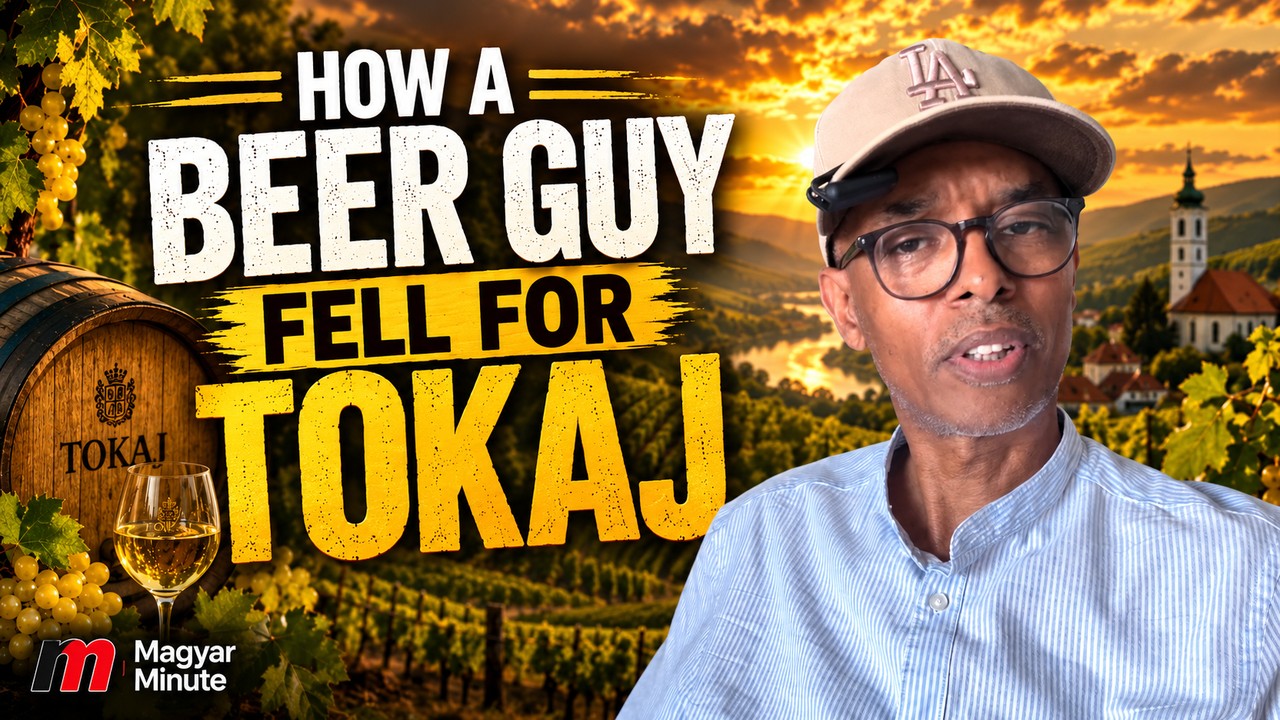
How A Beer Guy Fell For Tokaj
A self-described beer guy who did not take his first drink until 28 gives a full day to Tokaj, Hungary’s oldest wine region, and finds a place whose entire philosophy is that you cannot rush it.
Notes
There is a certain kind of person Tokaj was never built to impress, and Ray will be the first to put himself in that category. He came up in the music business and somehow passed through all of it without becoming a drinker. He did not have his first drink until he was 28, and hand him a wine list today and he is still not the one studying it. So the honest question is not what Tokaj tastes like. It is how a self-described beer guy gave an entire day to Hungary’s most famous wine region and came home unable to stop talking about it.
The Friend Who Did The Impossible
The short answer has a name: Roland. Roland Matyasi is a partner at Ménesi Borbár, a wine bar on the Buda side of Budapest that describes itself, plainly, as a place for people who love Hungarian wine. He and Ray met years ago, when Ray was producing a show on Budapest.fm and the crew filmed an episode at Roland’s place. They clicked, and then Roland set himself a patient project: getting a man who barely drinks to actually understand wine, and Hungarian wine in particular. He is the reason Ray can now tell a thin, forgettable bottle from one with something to say. So when Roland proposed driving up to Tokaj, the answer was easy.
The drive set the tone. They took Roland’s German-built electric supercar into a stretch of countryside where a fast charger can feel like a rumor you are chasing, and a good part of the day turned into a hunt for somewhere to plug in. It sounds like a problem. It was the perfect introduction, because the lesson every winemaker repeated, from different directions, was the same: slow down.
A Region Built On Patience
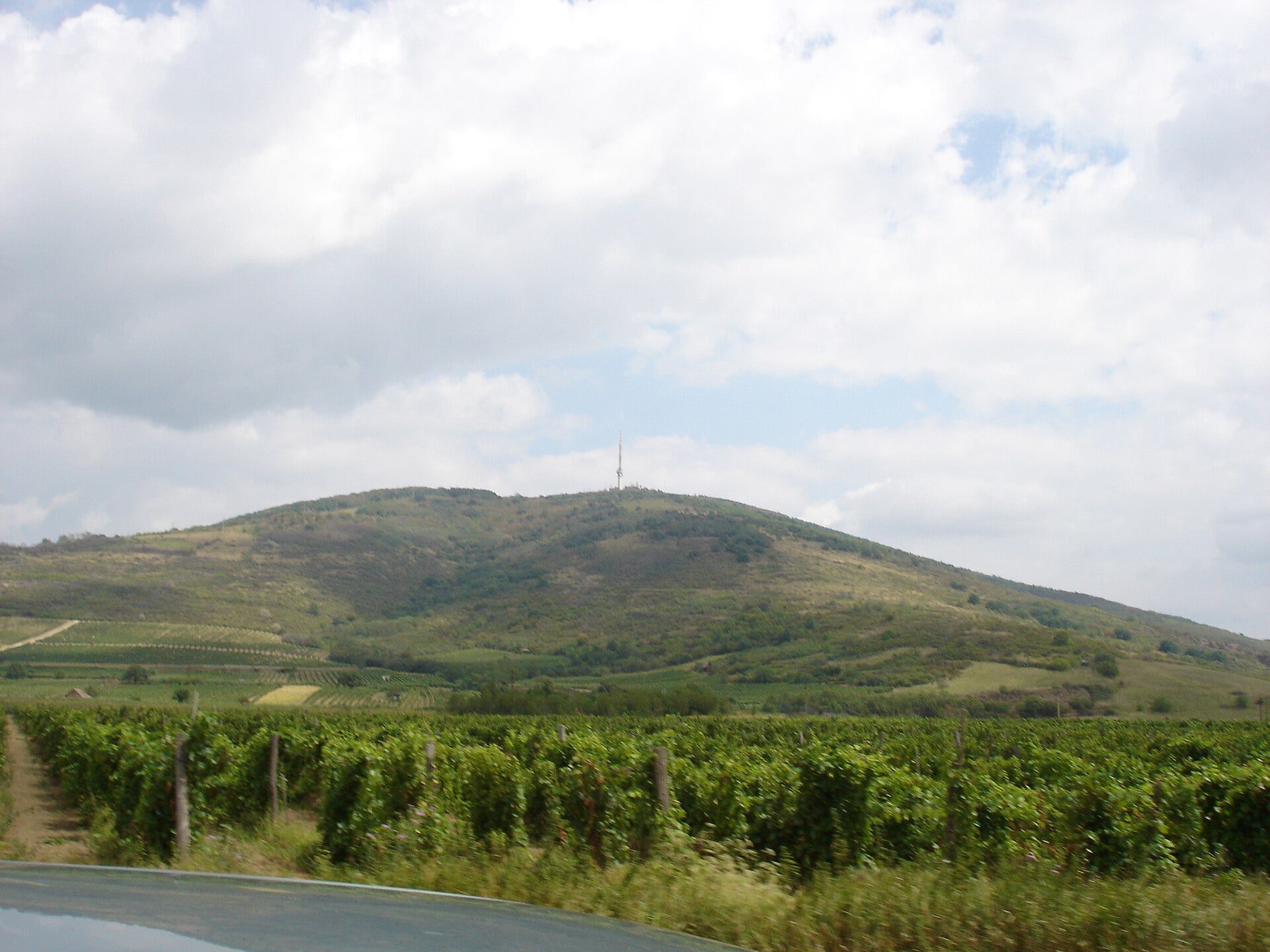
Tokaj rewards that instruction. Tucked into Hungary’s northeastern corner where the Bodrog meets the Tisza, the region sits on old volcanic rock, and the two rivers do something crucial each autumn. They send up morning mists that hang in the vineyards, followed by warm, dry afternoons. That daily rhythm of damp and sun is exactly what coaxes Botrytis cinerea, the so-called noble rot, onto the grapes. The main varieties, high-acid Furmint and floral Hárslevelű, are unusually willing partners in it. In 2002 the whole landscape, vineyards and cellars and villages together, was named a UNESCO World Heritage site, not for a single monument but for a way of farming that has barely changed in centuries.
The Craft You Cannot Rush
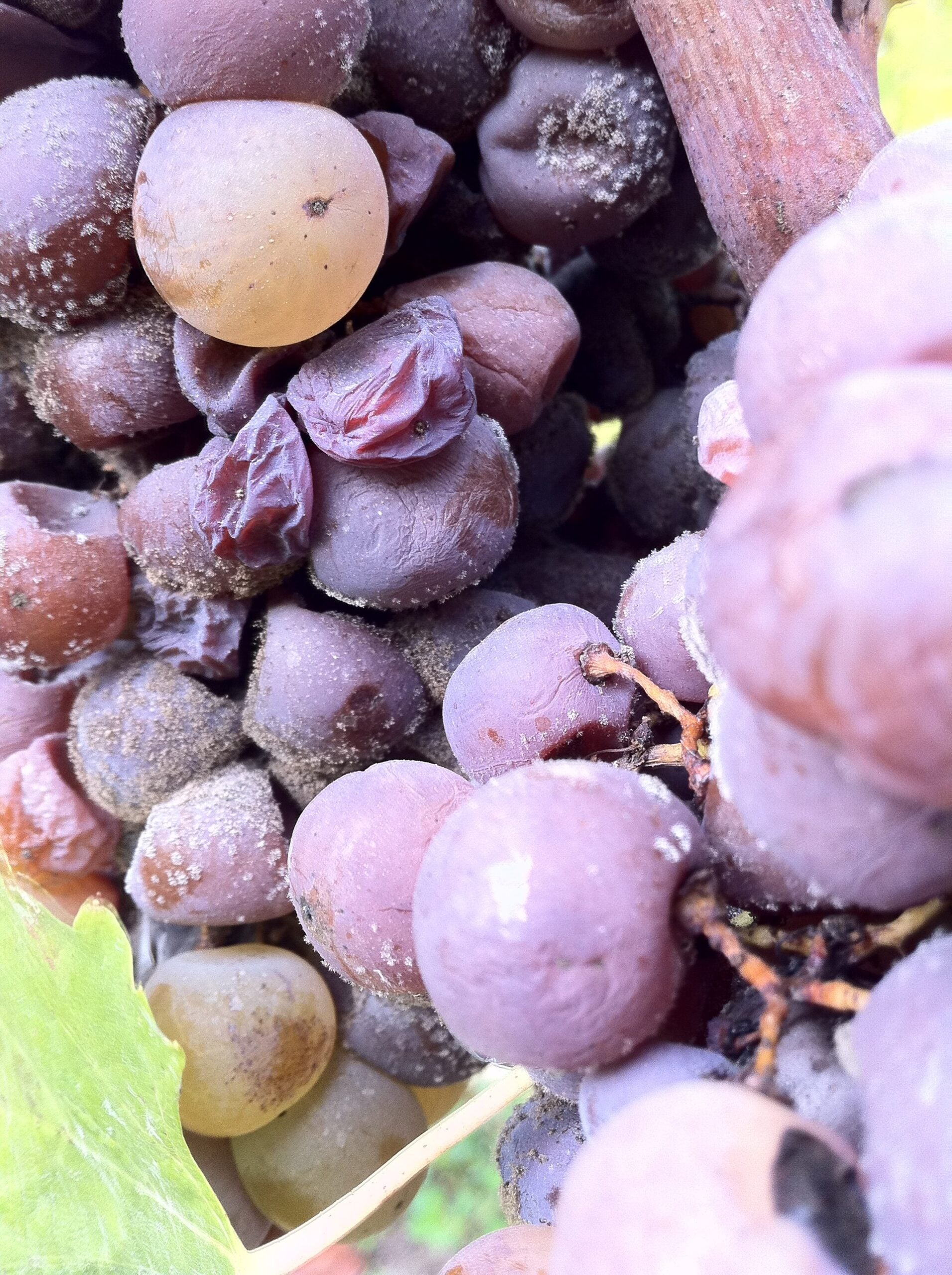
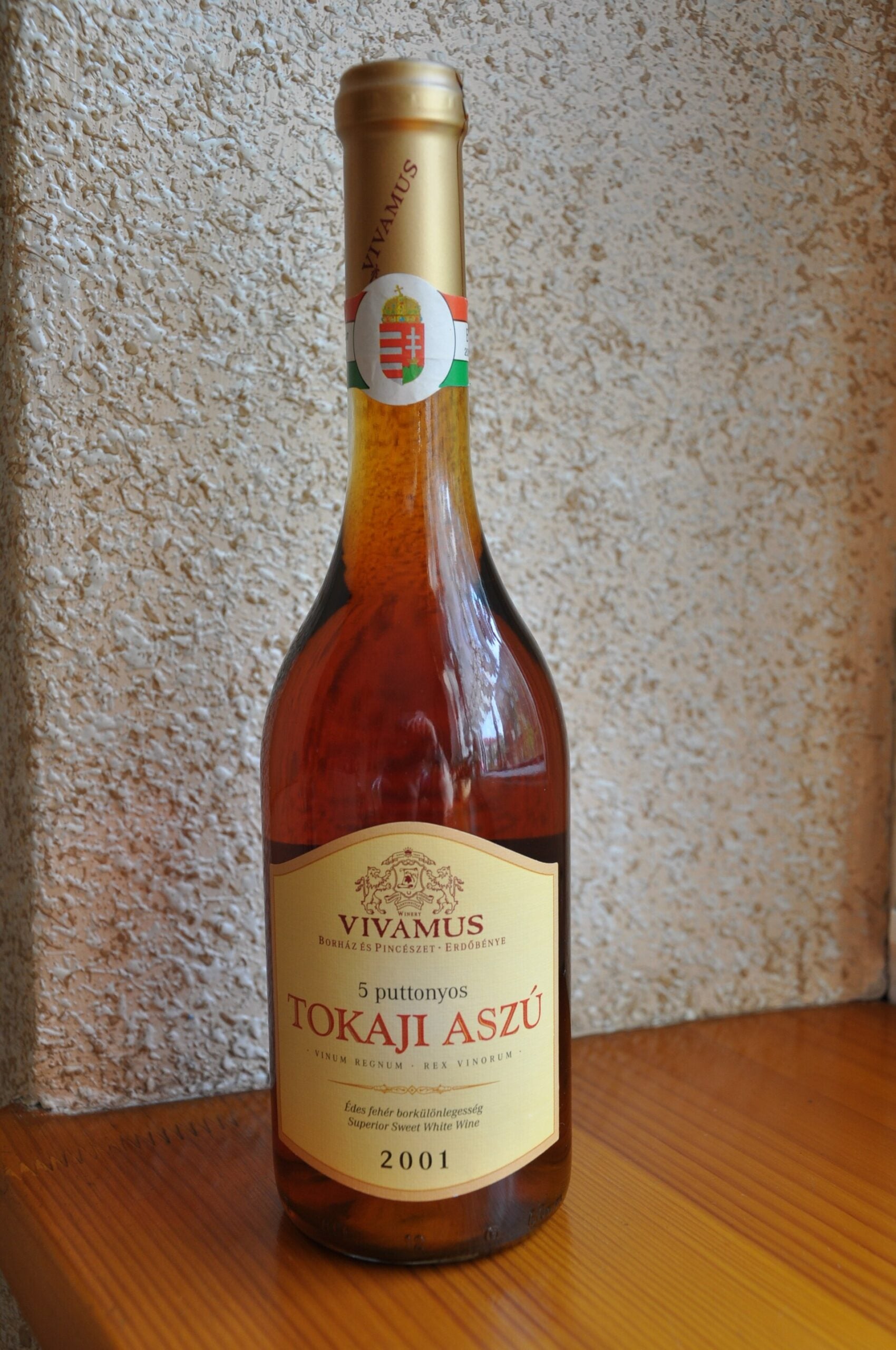
That noble rot is the heart of aszú, the golden sweet wine that made the region famous. The fungus shrivels each berry like a raisin and concentrates everything inside it, the sugar, the acid, the flavor. Those shrivelled berries are still picked one at a time, by hand, in pass after pass through the rows. Stand in a vineyard for an hour and you may not fill a quarter of a bucket. The old measure of sweetness, the puttony, was literally a hod of these berries kneaded into a barrel of base wine, and the rarest expression of all, Eszéncia, is the free-run juice that seeps from the berries under their own weight, so concentrated it can take years to ferment and barely reaches a few degrees of alcohol. One grower told Ray that autumn is the only moment you can see Tokaj whole, the past, the present and the future all sitting in a single glass. Another put the local creed more bluntly: we do not drink because life is hard and we want to forget it, we drink because, despite all of it, life is beautiful.
Five Hundred Years, And Counting
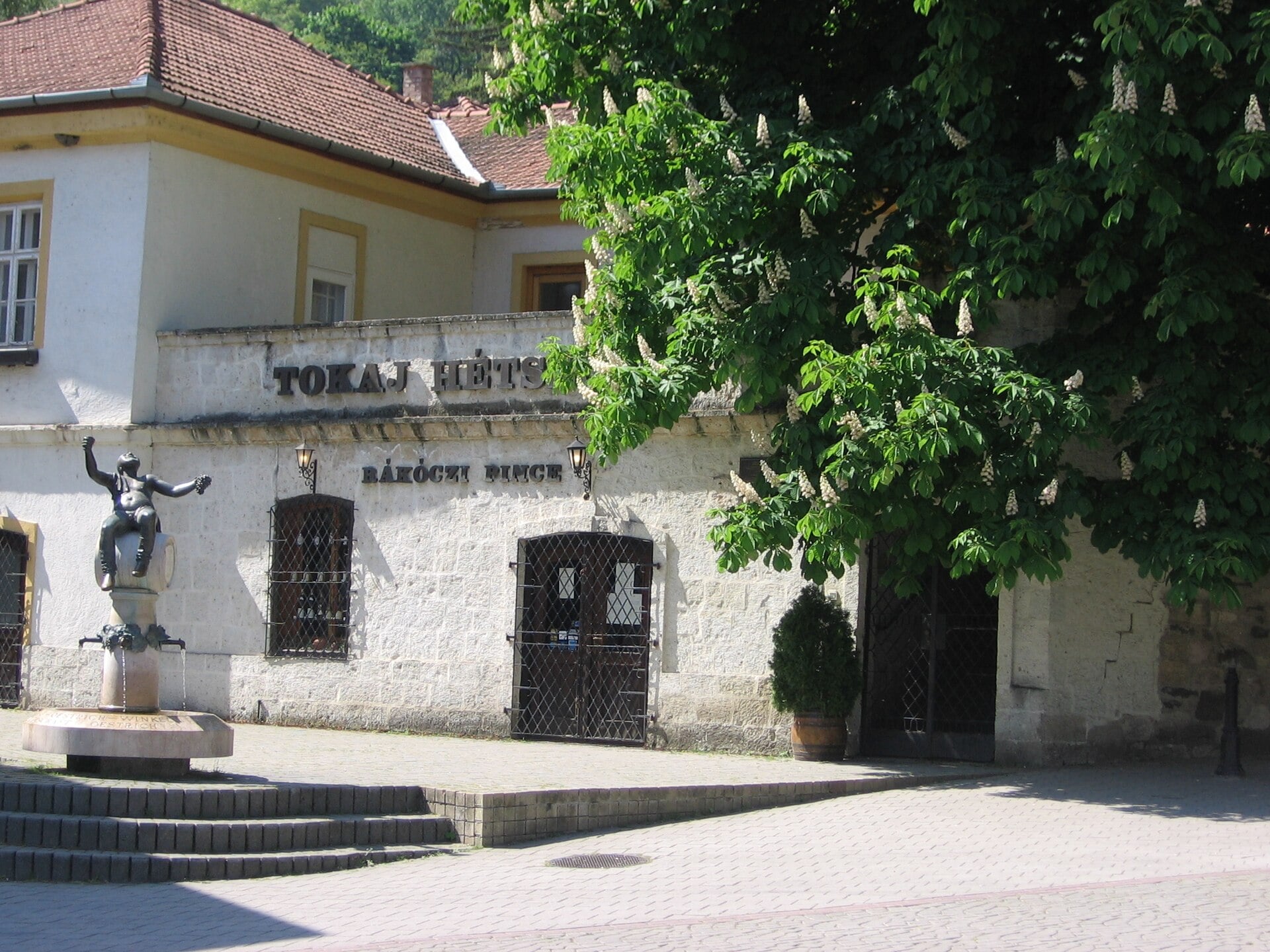
None of this is new. Tokaj’s best vineyards were formally classified in 1737 by royal decree, a full 118 years before Bordeaux drew up its famous 1855 ranking, which by most accounts makes Tokaj the first classified wine region in the world. The wine had already conquered the European court. Louis XIV, served Tokaji sent from Hungary by Prince Ferenc Rákóczi II, is the one credited with the line still printed on the bottles, the king of wines and the wine of kings. The region then survived nearly everything history threw at it, including the communist decades, when the state ran the cellars and many growers were not even allowed to bottle wine under their own names. Five centuries into the story, the people there will tell you, without irony, that they are just getting started.
The People Who Stayed
The recovery has a center of gravity, and it is a single family in the town of Mád. István Szepsy, widely called Mr. Tokaj, spent the years after 1990 proving that the region could make great dry wine, not only sweet. He bottled Tokaj’s first serious dry Furmint in 2000, and his single-vineyard Szent Tamás earned the line that follows him everywhere, Jancis Robinson’s description of it as the Montrachet of the East. He farms the way a fanatic farms: yields cut to the bone, barely three tonnes a hectare for the dry wines and a punishing four tenths of a tonne for aszú, every parcel vinified on its own. The Szepsy name in these hills reaches back to the late sixteenth century, to the ancestor credited with bottling the first aszú in 1631. After a stroke slowed the elder Szepsy, the estate passed to his son, István Szepsy Jr., the sixteenth generation to hold it. He is the man Ray sat across from, and the thing he said stuck: the era of giant, anonymous wine fairs is fading, and the future belongs to something smaller and more personal, the kind of gathering you have to slow down to attend.
An Invitation, This Fall
Which is more or less why Ray is telling all of this now. This September, from the 18th to the 20th, a deliberately small group, somewhere between 70 and 100 people, will gather at the Minaro Hotel in Tokaj for a weekend called Tokaji Ősz, a Tokaj autumn. It is invitation only, and it has quietly run for close to two decades. The format is exactly the kind Szepsy was describing: direct tastings at the region’s defining estates, Szepsy and Disznókő and Oremus, Sauska and Demeter Zoltán and Barta among them, a Master of Wine walking guests through the bottles, a Michelin-starred chef cooking a gala dinner, and a Sunday sparkling brunch to send everyone home slowly. Ray is lucky enough to be part of it. None of it makes any sense if your goal is to move fast, which is exactly the point.
Why It Landed
Ray has spent most of his life in motion, chasing the next country, the next tour, the next project. The people he met in Tokaj are doing the opposite. They are not chasing anything. They are protecting something, a vineyard, a craft, a family name, a way of life that has outlasted kings and empires and one very long dictatorship and means to outlast a good deal more. He drove up a beer guy. He left finally understanding why Roland never stops talking about the place. You cannot rush Tokaj, and after a day there, you would not want to.
Fact Check
A few points from the video, checked against the record.
In The VideoRay sits down with a Tokaj winemaker whose name is hard to make out on camera.
Setting It StraightFor the record, the estate is Szepsy, the most storied name in Tokaj. The legendary István Szepsy, often called Mr. Tokaj, stepped back after a stroke, and his son István Szepsy Jr., the sixteenth generation, now runs the winery in Mád. Source
In The VideoTokaj’s vineyards were formally classified more than a century before Bordeaux.
Setting It StraightCorrect, and the gap is even tidier than it sounds. Tokaj was classified by royal decree in 1737, 118 years before Bordeaux’s 1855 system, which makes it the first classified wine region in the world. Source
In The VideoLouis XIV called Tokaji the wine of kings and the king of wines.
Setting It StraightThe attribution holds up. The line is credited to Louis XIV, who was served Tokaji sent from Hungary by Prince Ferenc Rákóczi II, and it is still used to market the wine today. Source
Spot something off in this video?Suggest A Correction
Mentioned In This Video
Places
- Tokaj Wine RegionHungary’s most famous wine region, in the northeast where the Bodrog meets the Tisza, on volcanic soil ideal for noble rot.View Map
Restaurants & Cafés
- Ménesi BorbárRoland Matyasi’s Budapest wine bar, devoted to Hungarian wine, where Ray’s education began.View Map
Businesses
- Szepsy Winery, MádThe estate of István Szepsy, “Mr. Tokaj,” who made Tokaj’s first dry Furmint in 2000, now run by his son István Szepsy Jr.
Sources & References
- Tokaj-Hegyalja, UNESCO World HeritageThe vineyards, cellars and villages were inscribed together in 2002 for a winemaking tradition nearly unchanged in centuries.
- Tokaji AszúThe golden sweet wine made from noble-rot Furmint and Hárslevelű berries picked one at a time.
Related Links
- Tokaji Ősz 2026The invitation-only Tokaj weekend, 18 to 20 September 2026 at the Minaro Hotel, with tastings at the region’s top estates.
Want The Full Transcript?
Get a clean, printable PDF of this video's transcript. Drop your email and we'll send it over.

Share This Story
Point a phone camera at the code to open this page, or download it to share anywhere.
Download QRWhich Hungarian Wine Or Wine Region Should I Try Next?
Tell Ray
Share Or Use This Story
Pass It On. Give It A New Audience.
Share the link with someone who would enjoy it, or use the cover and suggested caption to introduce the story.
Get The Cover And Caption
 Download Landscape Cover ↓Request Permission To Republish →
Sharing a link is welcome. Republishing the article, video, or images requires permission.