
What Budapest Gives My Son Without Ever Teaching Him
A bridge that was blown up and rebuilt, a parliament too big to take in at once, a tram that makes the river appear. My son is collecting a country without anyone sitting him down to explain it.
Liberty Bridge and Kossuth Lajos tér, Budapest
Notes
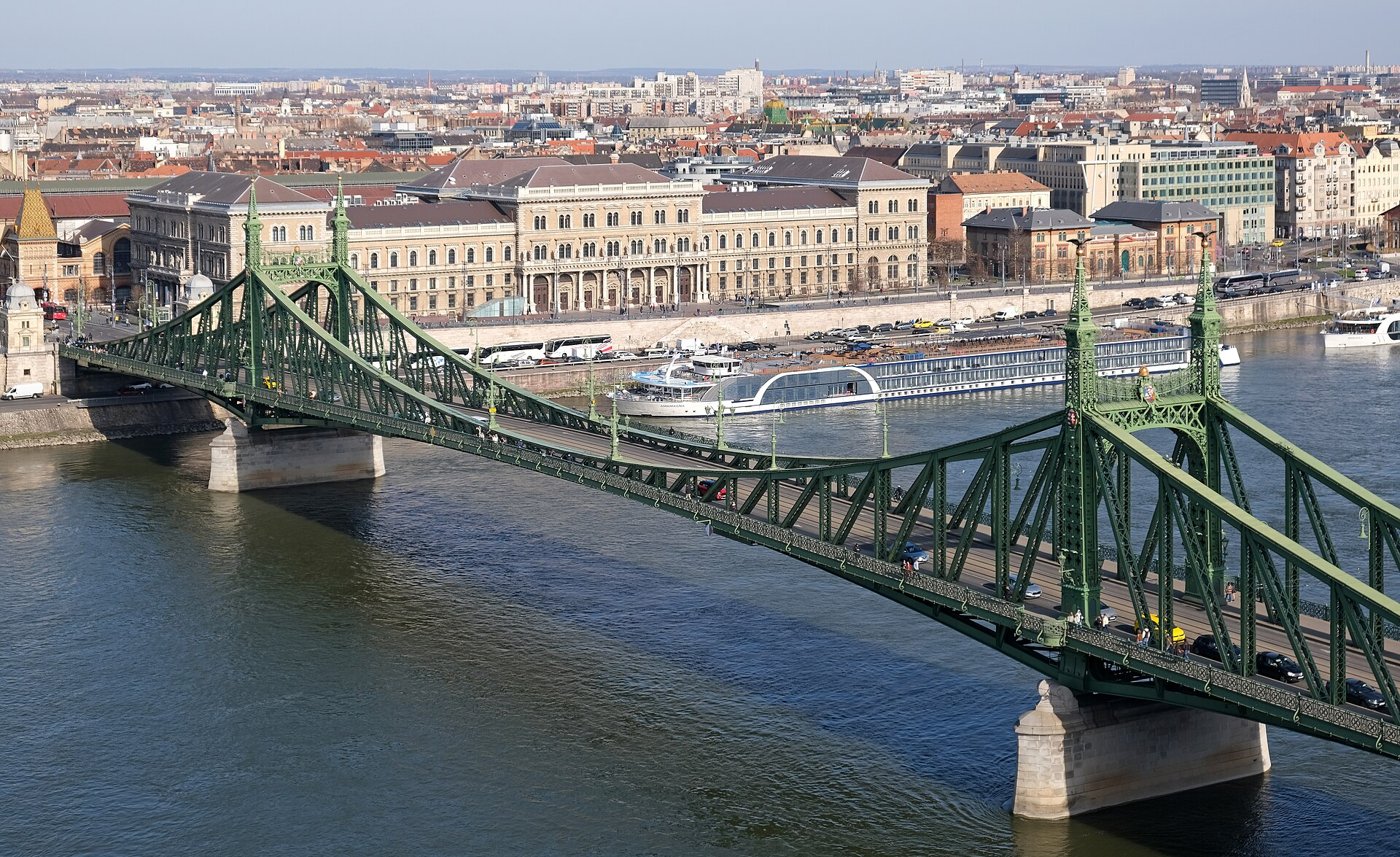
The bridge in this video is the Szabadság híd, the Liberty Bridge, the green one at the bottom of the city where Pest runs out and Gellért Hill begins. My son has walked across it. He has no idea what it is, and that turns out to be the point.
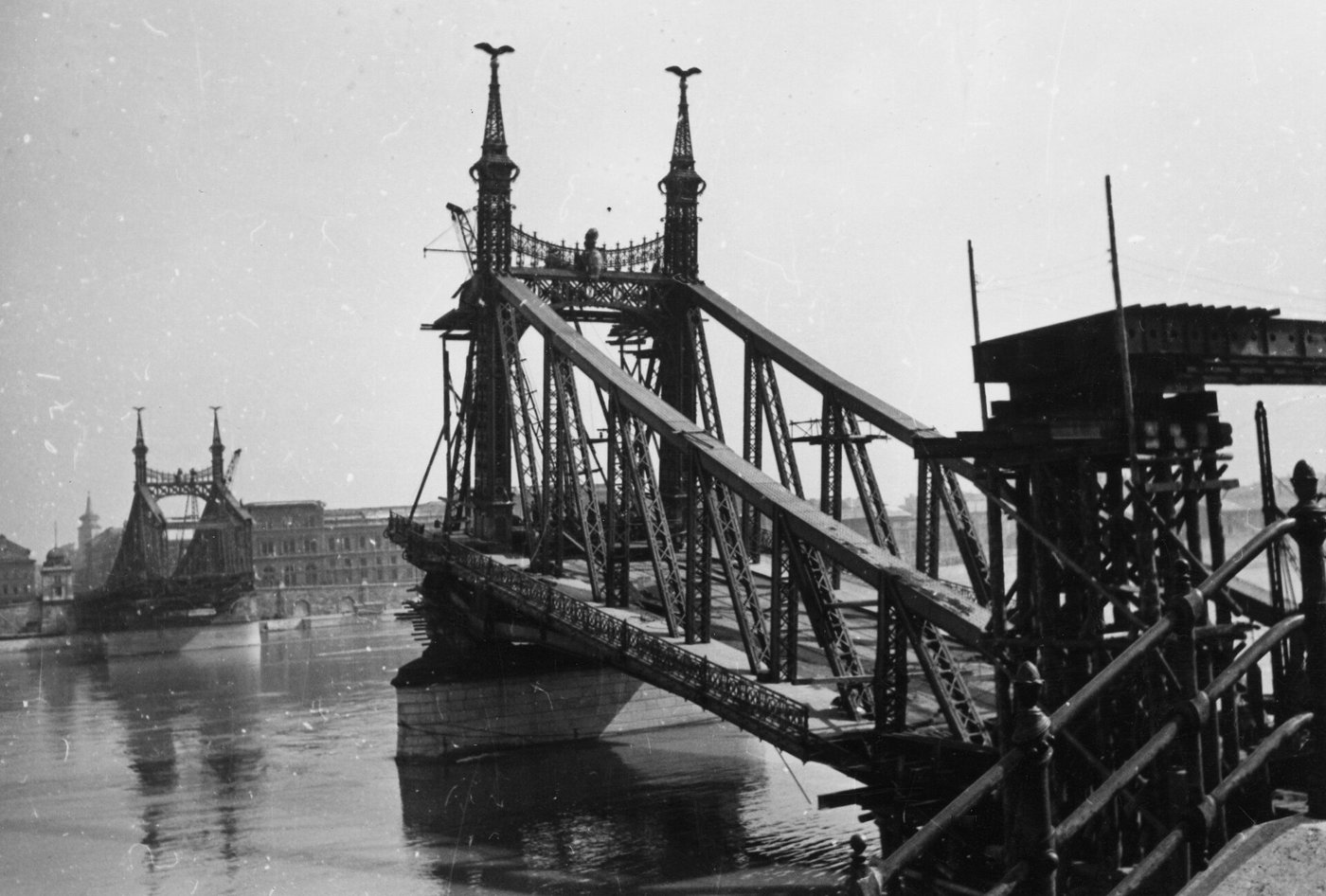
Here is what it is. It opened on 4 October 1896 under a different name, the Ferenc József híd, and the emperor it was named for turned up and hammered in the last rivet, which was silver. It is 333.6 metres long, a cantilever bridge doing a convincing impression of a chain bridge, with turul birds standing on top of the towers. On 16 January 1945 the retreating German army dropped it into the Danube along with every other bridge in the city. It was the first one Budapest put back. Repairs started in the spring of 1946 and it reopened that August under a new name, Liberty. Wherever the old ornament could be picked out of the wreck, it was cleaned up and bolted back on.
None of that is available to a small boy holding your hand. What is available is the height of the railing, the noise a tram makes coming up behind you, the gaps in the boards, the river going the wrong way underneath. That is what he is actually taking, and it is the better deal. A city does not hand itself over as a lecture. It hands itself over as a floor.
A city that was assembled
Budapest is not an ancient thing that has simply always been here. It was put together. On 17 November 1873 three separate towns became one: Pest with roughly 200,000 people, Buda with 54,000, and Óbuda with 16,000, plus Margaret Island. Not two halves of anything. Three unequal pieces, and the oldest and smallest of them, Óbuda, standing on the Roman town of Aquincum, has been quietly dropped out of the sentence ever since.
So the city my son is growing into is 153 years old as a single thing, younger than plenty of the buildings standing in it. It was decided, then built, then flattened in places, then decided again. That is not a weakness in it. It may be the most Hungarian thing about it.
What he is actually collecting
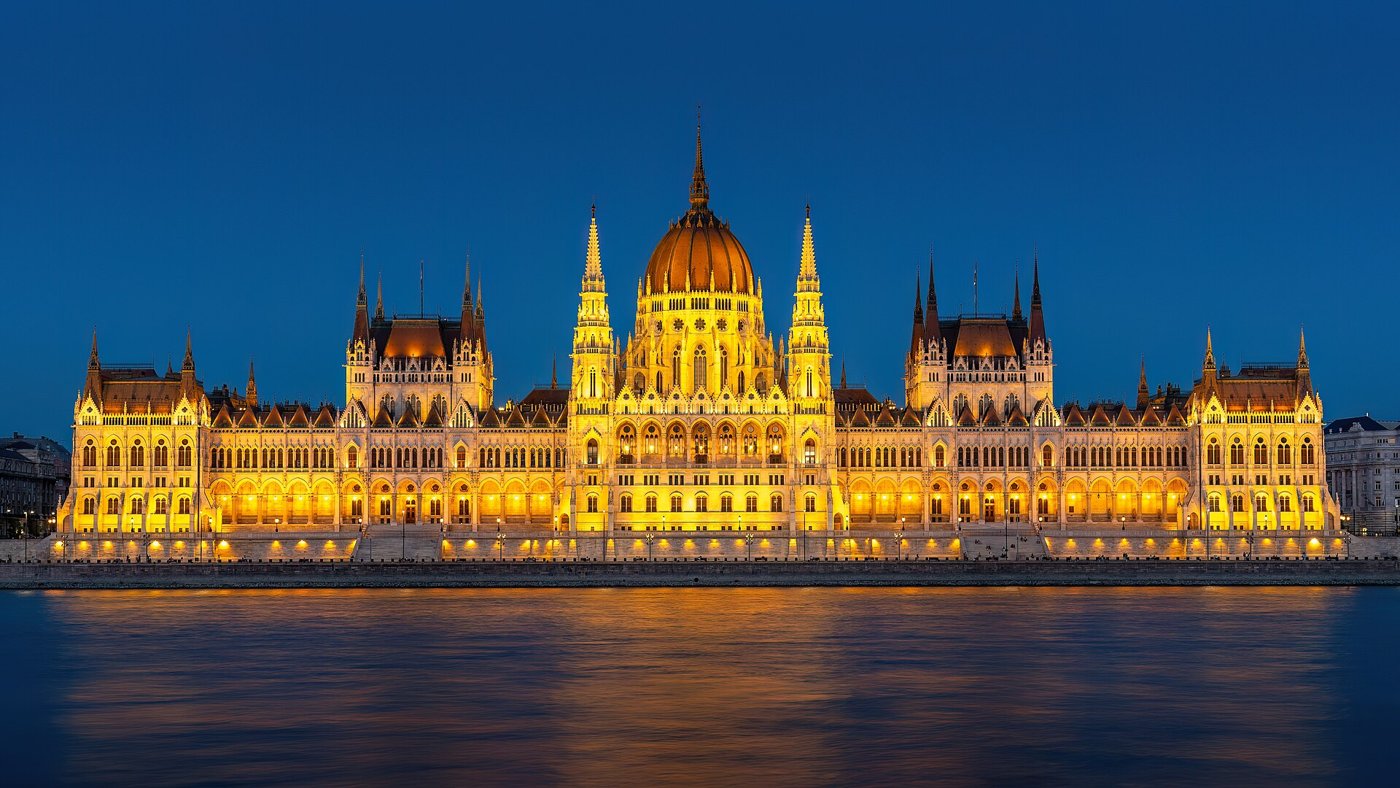
Take the stretch of pavement in front of the Parliament. That building is 268 metres of neo-Gothic showing off, and it is 96 metres tall because 896 is the year the Hungarian story starts. He will not learn the number 896. He will learn that the building is too big to take in all at once, which is the same fact arriving by a better road.
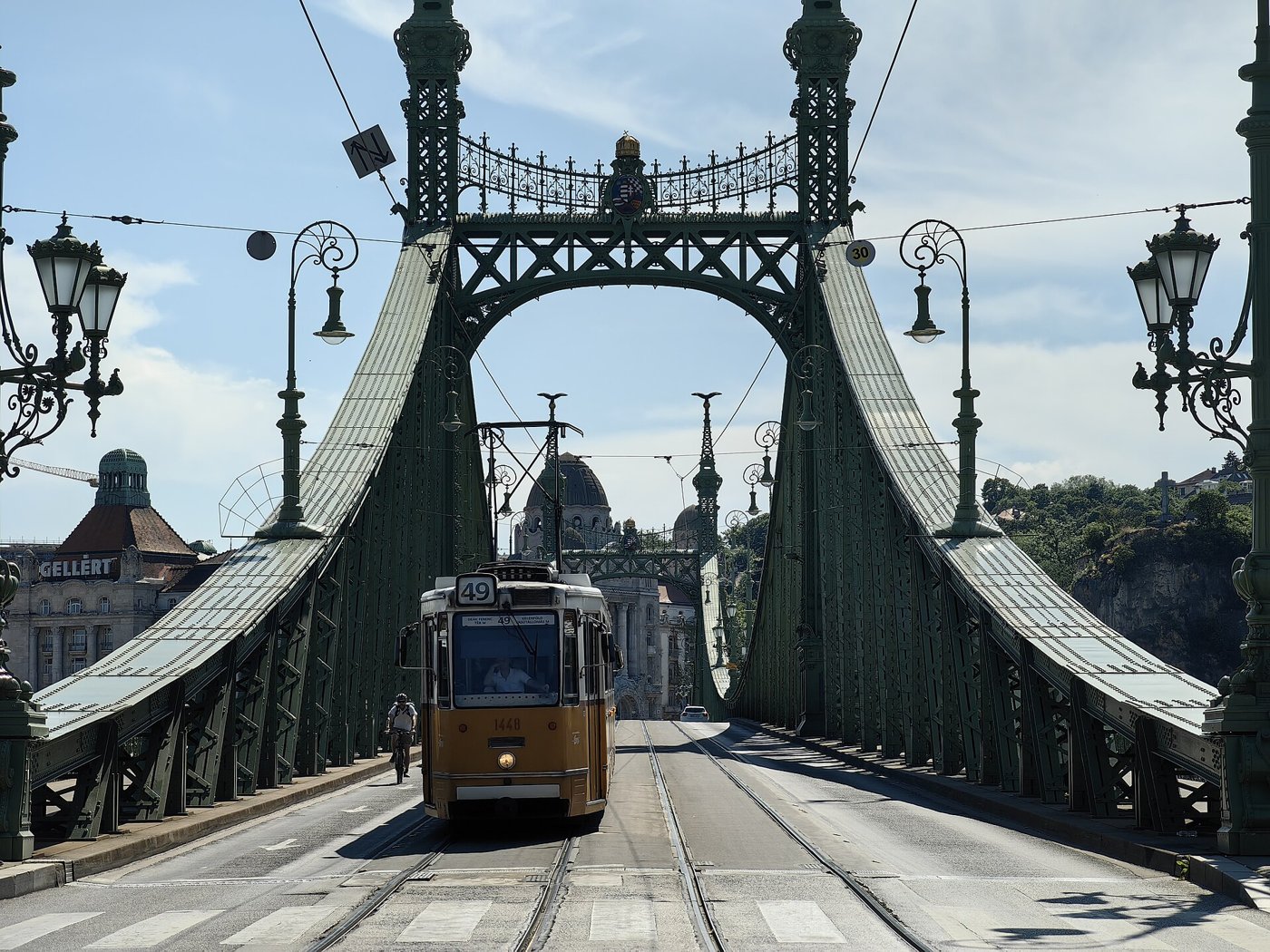
Take the tram. Lines 47 and 49 cross Liberty Bridge and have been crossing it since 1898. To him a tram is not transport. It is the thing that makes the noise and then the river appears.
Take the language, which is the one that gets me. He already handles it better than I ever will. I work at Hungarian. He simply has it, the way you have a leg. Nobody sat him down and started him off. He picked it up off the floor of this city the same way he picked up the railing and the swing and the gap in the boards.
That is the real argument for raising him here, and it has nothing to do with schools or safety or the cost of living. It is that a place can hand a child something whole without either of you doing any work, and what Budapest is handing him is a country.
The rest of him
He is American as well, and he is Black, and those are not things a Hungarian pavement can give him. That part I bring myself, and gladly. Music in the house. Food. Names and faces and the people who are his. Going back often enough that America is somewhere he has been rather than somewhere he is from on paper. It is mine to hand over, and he will have all of it.
None of that competes with the Hungarian side. A child is not a pie chart. He gets everything, from wherever it comes, and the more of it that arrives without a lesson attached the better it holds.
What the bridge is for
Which puts me back at that salvaged ornament on the towers.
Nothing on that bridge survived by itself. It was destroyed completely, in a single morning. Somebody then went down to the wreck, picked the decoration out of the rubble, cleaned it, and bolted it onto a new structure, deliberately, because they decided it should carry forward. Continuity is not something that happens to a city, or to a family. It is a series of decisions somebody makes, usually at an inconvenient moment and usually without anybody thanking them for it.
Budapest has been making those decisions for 153 years, and my son gets the result for nothing, through the soles of his shoes. Whatever else he carries, I hand him myself.
Then he can go back to the playground.
Fact check
A few points from the video, checked against the record.
In the videoBuda on one side, Pest on the other, two halves of an argument that got settled long ago.
Setting it straightThree towns, not two, and nothing like halves. Budapest was assembled on 17 November 1873 out of Pest, Buda and Óbuda, with Margaret Island added in. Pest had roughly 200,000 people at the time, Buda 54,000 and Óbuda 16,000. Óbuda is the oldest of the three, sitting on the Roman town of Aquincum, and it is the one that gets dropped from the sentence every single time. source
Spot something off in this video?Suggest a correction
Mentioned in this video
Places
- Liberty BridgeOpened 4 October 1896 as the Ferenc József híd, destroyed on 16 January 1945, and the first Budapest crossing rebuilt after the war. 333.6 metres of cantilever doing an impression of a chain bridge.View map
- Hungarian Parliament BuildingImre Steindl's design, built between 1885 and 1904. 268 metres long and 96 metres tall, the height chosen to point at 896.View map
- Kossuth Lajos térThe square in front of the Parliament, and the stretch of pavement in the video.View map
- ÓbudaThe third town in the 1873 merger and the oldest of them, standing on the Roman town of Aquincum. The one the Buda and Pest story always leaves out.View map
Sources & References
- History of BudapestPest, Buda and Óbuda became a single city on 17 November 1873.
- Siege of BudapestRetreating German forces destroyed every Danube bridge in the city in the winter of 1944 to 1945.
- FortepanHungarian public photo archive. The 1946 picture of the bridge under repair comes from it.
Related Links
- Trams in BudapestLines 47 and 49 cross Liberty Bridge. The first tram ran over it in 1898.
Want the full transcript?
Get a clean, printable PDF of this video's transcript. Drop your email and we'll send it over.

Share this story
Point a phone camera at the code to open this page, or download it to share anywhere.
Download QR