
Trieste: Hungary’s Long Way Back To The Sea
A landlocked country is quietly buying its way back to the Adriatic, in a city it lost an empire ago. The deep history, the living present, and the strategy behind Hungary's new door to the sea at Trieste, the city I have loved since the nineties.
Notes
The City That Is All Coffee And Sea
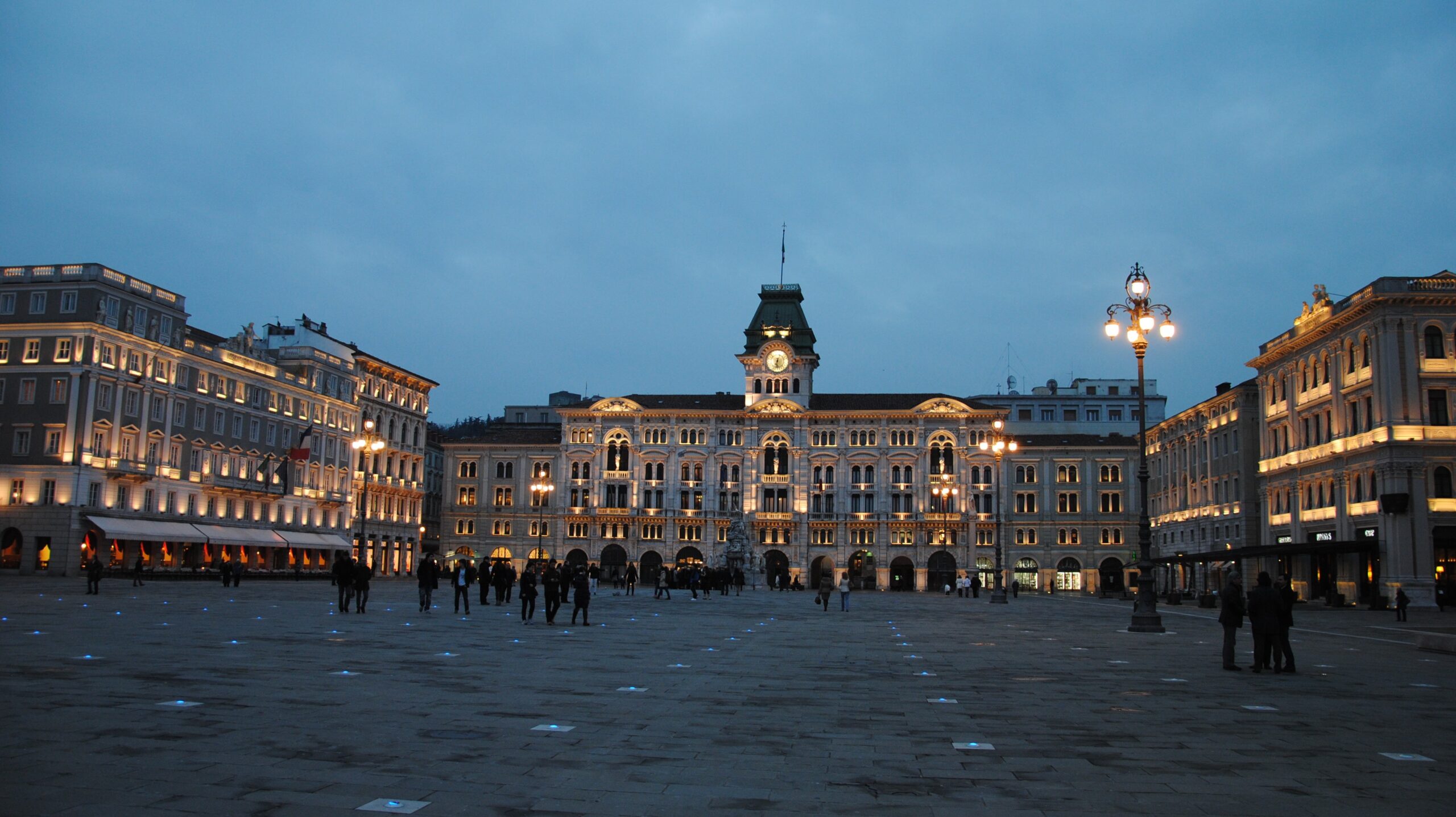
Stand in Piazza Unità d’Italia and you are looking at the largest sea-facing square in Europe, twelve thousand square meters of pale Habsburg stone opening straight onto the Adriatic. Behind you, the cafes have been pouring coffee since before Italy was a country. Caffè Tommaseo has been open since 1830, Caffè degli Specchi since 1839, Caffè San Marco since 1914, where the writers argued and James Joyce drank a few streets from the rooms where he worked on Ulysses. Trieste is Italy’s coffee capital, the home of illy, a city with its own coffee dialect. An espresso is a nero, an espresso with a drop of milk is a capo, a coffee in a glass has its own name. Order it wrong and they will know in a second you are not from here.
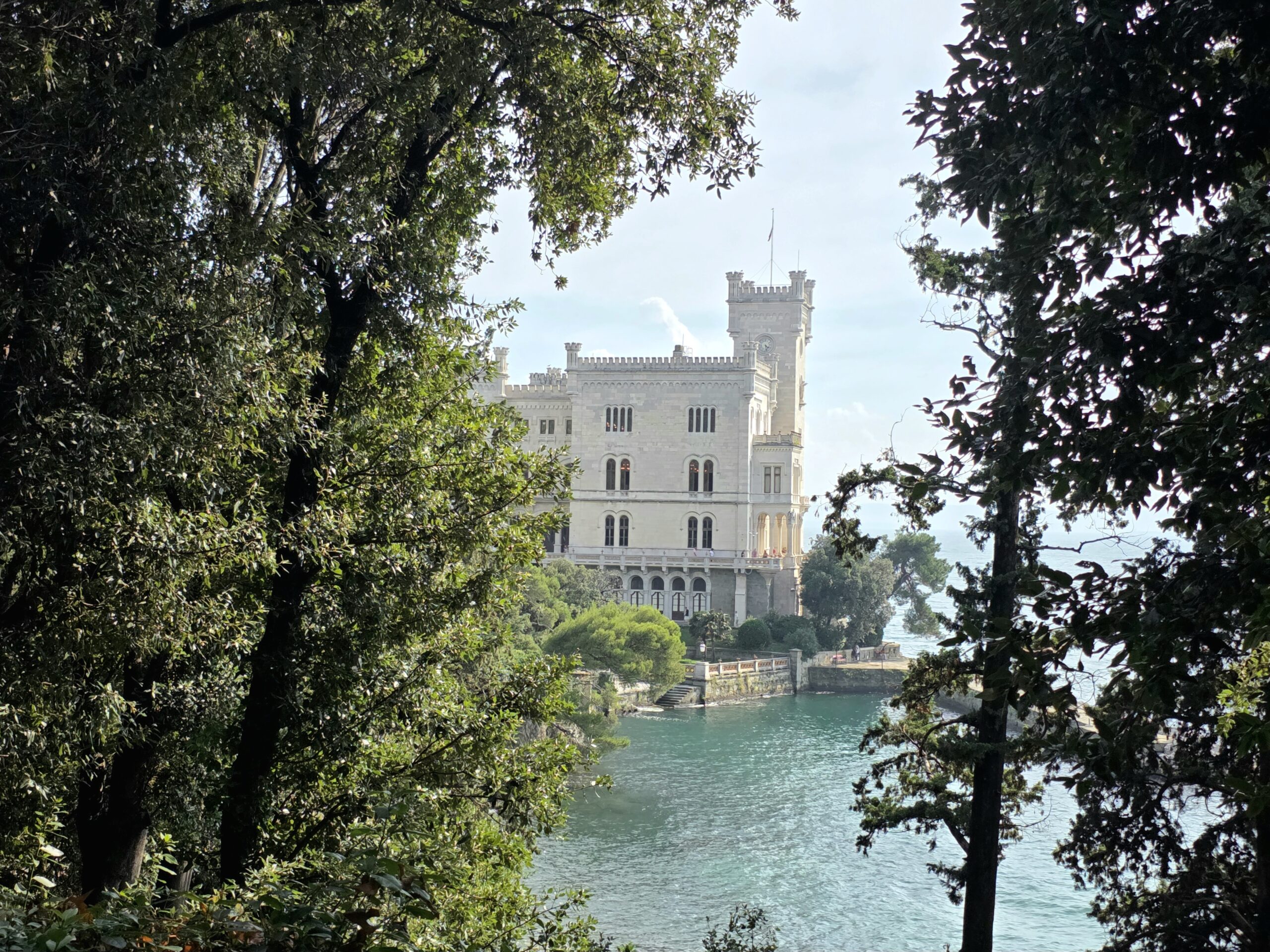
That is the Trieste I keep coming back to. Walk ten minutes and you reach the Molo Audace, a long stone pier thrown out into the water where the whole city goes to watch the sun drop. Drive up the coast and the white turrets of Miramare castle sit on the rocks like something out of a dream. Climb into the hills behind the city and you find the osmizze, rough farmhouse rooms where families sell their own wine and cured ham for a few weeks a year. And down in the old town, a butcher still carves hot boiled pork onto a wooden board, with mustard and a spoon of pale, creamy horseradish the locals call kren. It looks like a snack. It is really a receipt. That plate is one of the last edible traces of an empire.
When Trieste Was The Center Of The World
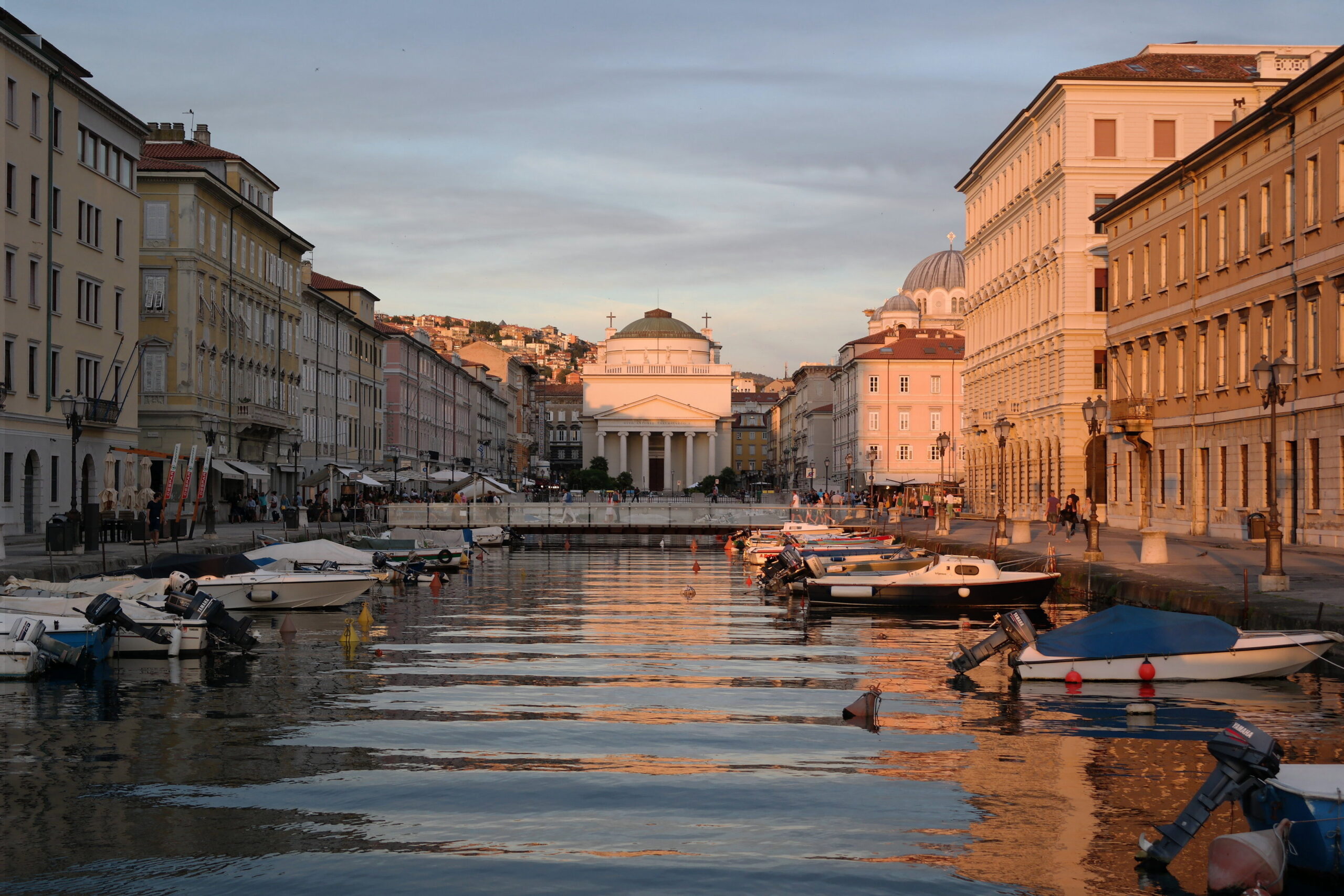
For two centuries Trieste was not an Italian city in the way we picture one. It was the sea. In 1719 the Habsburg emperor Charles VI made it a free port, and merchants poured in from every corner of the Mediterranean. Maria Theresa drained the old salt pans and raised a whole new district on them, the Borgo Teresiano, cut through by a grand canal so ships could sail into the middle of the city. By the 1830s Trieste had founded Assicurazioni Generali, still one of the largest insurers on earth, and the Austrian Lloyd line, soon the biggest fleet in the empire. A railway climbed north to Vienna. Greeks, Serbs, Slovenes, Jews, Armenians and Italians lived stacked together in one loud, polyglot port. Trieste was the only real seaport of Austria-Hungary, the place where a giant landlocked empire finally touched the water. The kren on that board, the coffee ritual, the Viennese pastries in the windows, all of it is what survived of the kitchens that empire built.
Hungary’s Lost Sea
Here is the part most people, even a lot of Hungarians, have half forgotten. Hungary had a sea once, and a port of its own. It just was not Trieste. Fifty kilometers down the coast sat Fiume, today’s Rijeka, which Maria Theresa handed to the Hungarian crown in 1779 as a corpus separatum, a separate body governed straight from Budapest. Fiume became Hungary’s only seaport, its one window on the open world. Budapest ran a railway down to it, launched the Adria steamship line, and poured money into the docks. For more than a century, when a Hungarian dreamed of the ocean, the dream had a name, and the name was Fiume.
Then it came apart. The empire lost the First World War, and on June 4, 1920, in a palace at Versailles, the Treaty of Trianon cut Hungary down to a third of its old size and two thirds of its people. It lost Fiume, which passed first to Italy and later to Yugoslavia. Overnight, a kingdom that had reached the Adriatic for a hundred and forty years was completely and permanently landlocked. For more than a century since, Hungary has had no coast at all. That loss is not an abstraction here. Trianon is still the rawest date in the country’s memory.
Why Trieste, And Why Now
Which is what makes the news I just heard land the way it does. Hungary is going back to the Adriatic, and this time the door is Trieste. A company owned outright by the Hungarian state, Adria Port, has taken a sixty-year concession on the site of an old refinery just south of the city and is building its own terminal there, around 650 meters of quay, with the first ships due in 2028. Hungary paid about thirty million euros for the ground. The whole project runs close to two hundred million.
And the reason is not sentiment. It is a map. Trieste sits at the very top of the Adriatic, which makes it the closest deep-sea port to the middle of Europe by a long way. Cargo coming up from Suez and Asia reaches Budapest through Trieste roughly two thousand kilometers sooner than it would through Rotterdam or Hamburg, days of sailing cut off the trip. More than half of everything that leaves Trieste leaves by rail, one of the highest shares of any port in Europe, and those rails run straight to Hungary. The port still carries the free-port status Charles VI gave it three centuries ago, where goods can sit with no customs and no VAT. Its container traffic jumped almost thirty-five percent in early 2025. For a landlocked country that lost its sea a hundred years ago, a terminal here is not nostalgia. It is the shortest line it can draw between itself and the ocean.
How I Heard It
My stake in all of this has nothing to do with freight. I first landed in Trieste thirty years ago, in the mid nineties, touring Europe with War, the band my father, Harold Brown, helped found and drummed for from the very start. I had helped produce their Peace Sign album, and that tour was the first time the world I had only seen in pictures turned real. Trieste was the stop that did it. I stepped off the bus, watched that butcher work, ate standing up, and thought, this is what it feels like to actually be somewhere. It became my favorite city in Italy and has never lost the title. In the summer of 2019 I was driving from Budapest down to Tuscany and made myself stop again. A seafood room called Menarosti that has been feeding people since 1903, and that was already basically closing, waved us in anyway and fed us like family. The city had not lost a thing.
And I did not read about Hungary’s port in a newspaper. I heard it this week, in an office in Budapest, from two Italians who love Trieste the way I do: Alessandro Farina and Luigino Bottega of the ITL Group. They even have a name for the bond between the two cities, TriBù, two cities, one soul. Three foreigners in one room, an American and two Italians, all of us landed in Hungary, all of us pulled toward the same small city on the water. I did not go hunting for the story. I followed my gut into a room and it was already there, waiting. That is the part I trust. Not the plan. The pull. A hundred years after Hungary lost the sea, it is quietly buying a way back, in the one city that has been teaching me what arrival feels like since I was a kid getting off a bus.

Fact Check
A few points from the video, checked against the record.
In The VideoHungary holds a long concession on that old Trieste port, decades of it, and is right now building its own terminal there, its own door to the sea.
Setting It StraightAccurate. To be precise, it is a 60-year concession, and the terminal is built by Adria Port Zrt., a company wholly owned by the Hungarian state, on the former Aquila refinery site at Muggia inside the Port of Trieste. About 650 meters of quay are planned, with the first ships expected in 2028. Quay-wall construction began in 2025, so the door is being built, not yet open. Source
In The VideoTrieste was the great port of this whole region 100 years ago, back when Budapest and Vienna and Trieste all belonged to the same empire.
Setting It StraightAccurate. Trieste was the principal seaport of the Austro-Hungarian Empire, declared a free port by Emperor Charles VI in 1719 and linked by rail to Vienna, until the empire dissolved in 1918. Source
In The VideoHungary is just reaching for the same water it always reached for.
Setting It StraightTrue in spirit, with one twist of history worth knowing. Hungary historic seaport was not Trieste but Fiume, today Rijeka, its corpus separatum from 1779 until the Treaty of Trianon took it in 1920. Trieste was Austria great port. So this is less a return to the very same harbor than Hungary reaching the Adriatic again through a new door, a century after losing the old one. Source
Spot something off in this video?Suggest A Correction
Mentioned In This Video
Places
- Port Of TriesteFree port and rail gateway to Central Europe.View Map
- Piazza Unità d'ItaliaThe largest sea-facing square in Europe.View Map
Restaurants & Cafés
- Ristorante Menarosti, TriesteSeafood institution since 1903, Via del Toro 12.View Map
People
- Luigino Bottega, How To Win At The Game Of LifeITL head of marketing and author.
Businesses
- Adria Port, Hungary Terminal At TriesteThe Hungarian state company building the new terminal.
- ITL GroupBudapest professional-services group founded 1995 by Alessandro Farina.
Sources & References
- Treaty Of Trianon (1920)When Hungary lost two thirds of its land and its access to the sea.
Related Links
- Fiume, Hungary Corpus SeparatumToday Rijeka. Hungary only seaport from 1779 until Trianon.
- War (Band)Spill the Wine, The Cisco Kid, Low Rider, Why Cannot We Be Friends.
- TriBù, Trieste And BudapestCultural initiative: two cities, one soul.
Also Mentioned
- Porcina Con Senape E KrenThe boiled pork, mustard and horseradish of Triestes Austro-Hungarian buffets.
Want The Full Transcript?
Get a clean, printable PDF of this video's transcript. Drop your email and we'll send it over.

Share This Story
Point a phone camera at the code to open this page, or download it to share anywhere.
Download QRWhich Food Experience In Hungary Should I Explore Next?
Tell Ray
Share Or Use This Story
Pass It On. Give It A New Audience.
Share the link with someone who would enjoy it, or use the cover and suggested caption to introduce the story.
Get The Cover And Caption
 Download Landscape Cover ↓Request Permission To Republish →
Sharing a link is welcome. Republishing the article, video, or images requires permission.