
Sarawak Came to Budapest: Hungary’s Quiet Trade Link to Borneo
A state on the island of Borneo flew its trade chief to a hotel on the Danube to ask Hungarian companies for business. The slides showed the two places were already wired into the same supply chain.
Budapest Marriott Hotel, Budapest
Notes
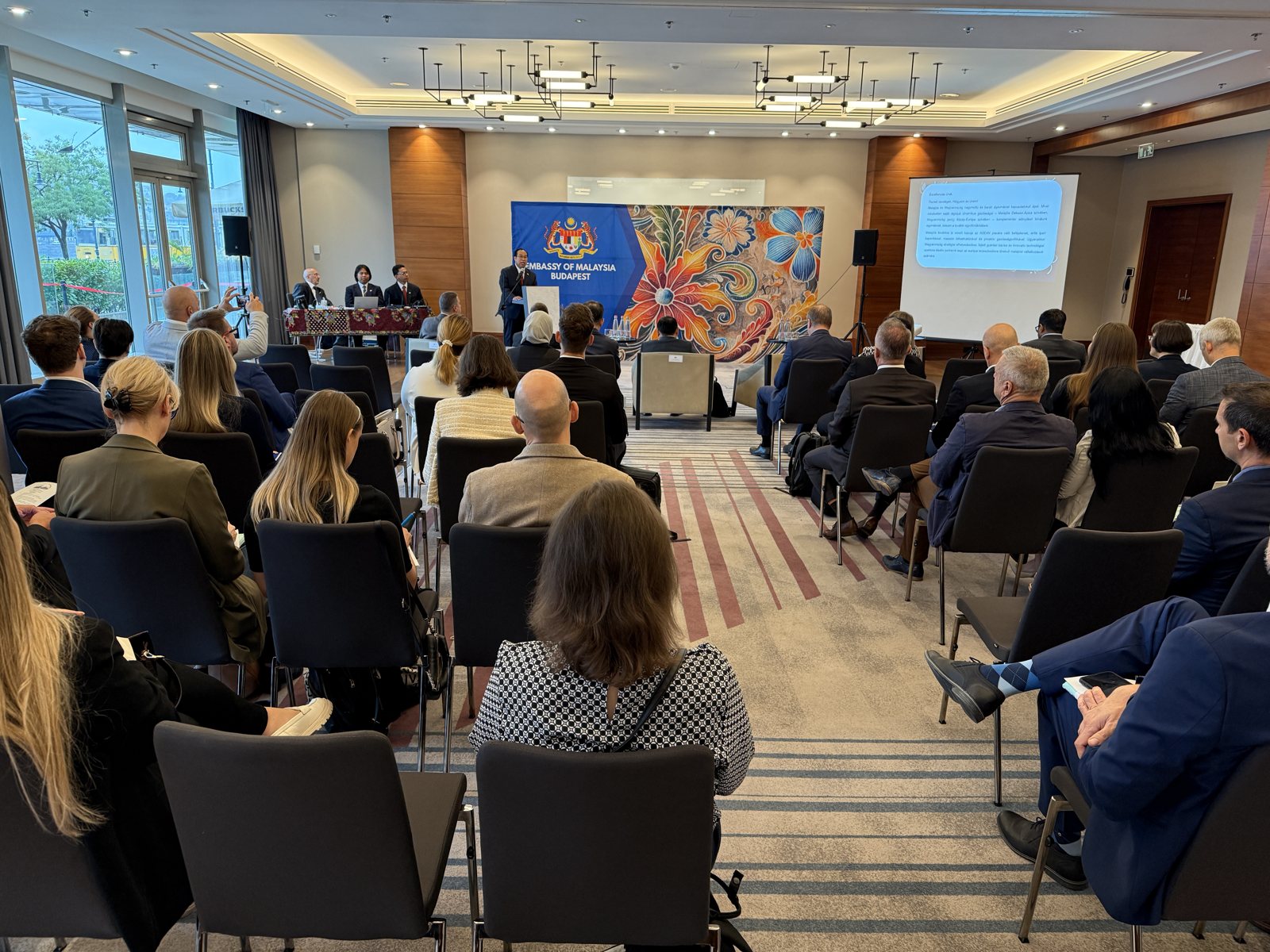
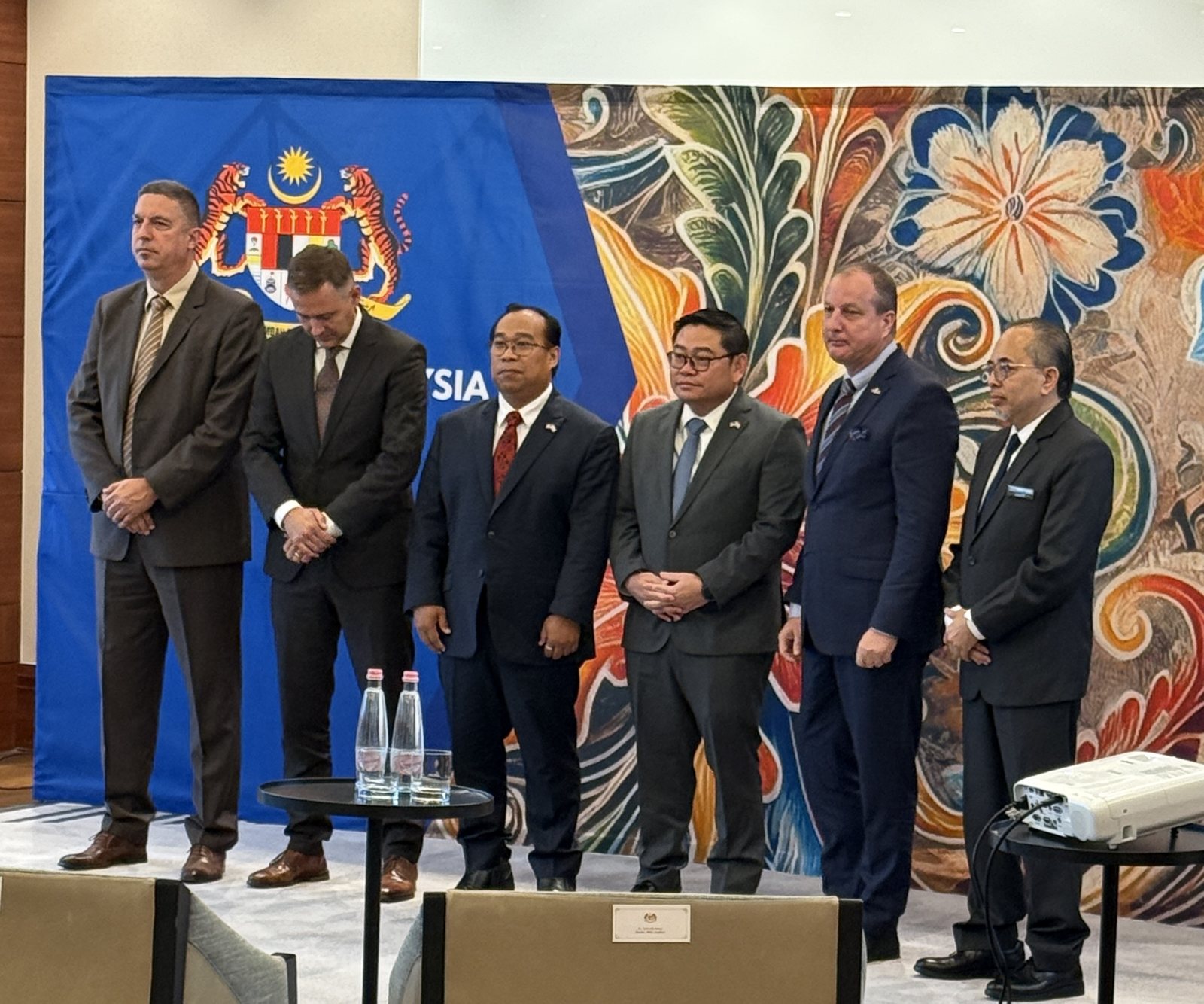
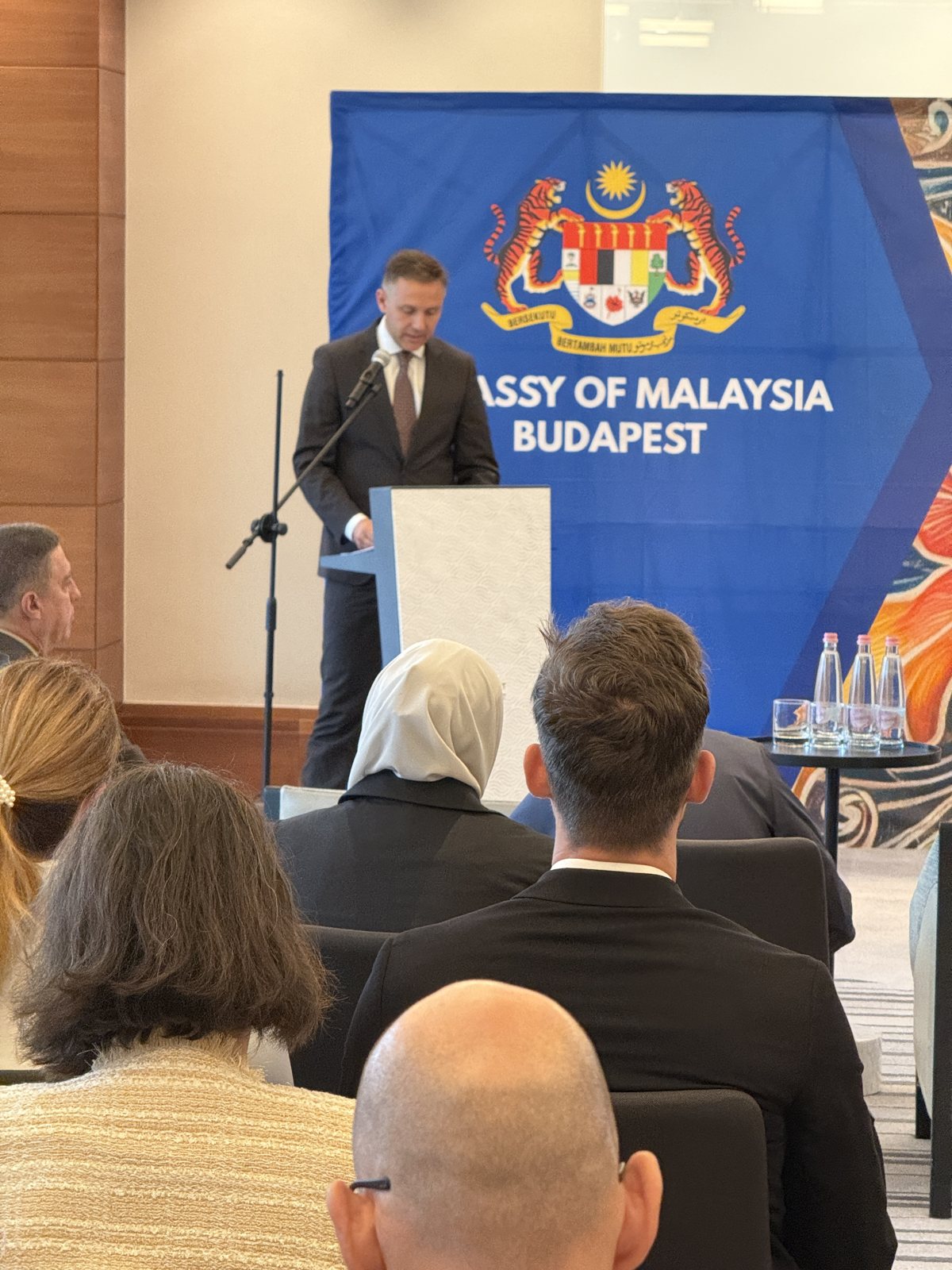
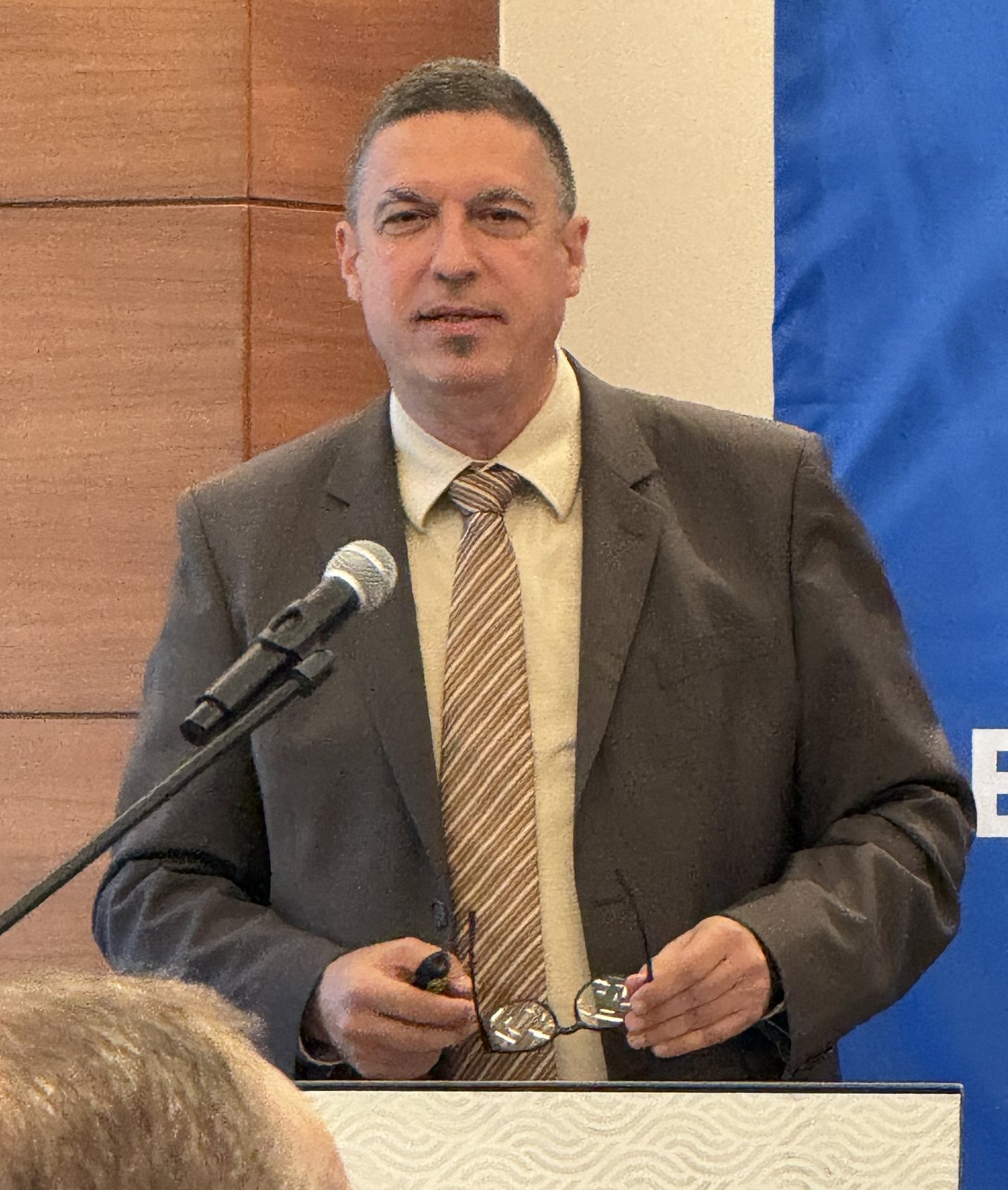
Someone has to book the room. That is the part that never shows up in a trade statistic. On a Friday morning in September, in a hotel on the Pest bank of the Danube, the Embassy of Malaysia in Budapest set out about 60 chairs, wired up a projector, and gave a delegation from the island of Borneo two hours to explain itself to Hungarian business.
The delegation came from Sarawak. If the name means nothing to you, that is the ordinary condition and not a lapse in attention. Sarawak is a Malaysian state occupying the northwest of Borneo, 124,450 square kilometres of it. That is 37.6% of Malaysia’s landmass and about a third more ground than Hungary covers. It is the largest state in the federation and one of the least discussed outside it.
It is also unusually free to do this sort of thing on its own account. Sarawak runs its own international trade, industry and investment ministry, and it kept control of its own immigration when Malaysia was formed in 1963. A Hungarian company dealing with Sarawak is dealing with Sarawak, not only with Kuala Lumpur. Which is why a state, rather than a country, was the one renting the projector.
What a state brings on the plane
The pitch opened on electricity, because that is the strongest card in the deck. Sarawak’s rivers carry roughly 20,000 megawatts of hydropower potential spread over about 50 possible sites. Around 3,452 megawatts of that is built and turning, almost all of it from three dams, with Bakun accounting for the bulk. A fourth, Baleh, is due before the decade is out and would push the total towards 4,700.
Numbers that size are not really about kilowatt hours. They are a promise about price and predictability, aimed squarely at anyone who melts sand or smelts metal for a living. Cheap firm power is the one thing a rainforest state can offer that a European industrial park cannot.
The second card was a track record, and it is a better one than the first. On the edge of Kuching sits the Sama Jaya Free Industrial Zone, opened in 1991 and now carrying more than 15,000 jobs against about 15.4 billion ringgit of invested capital. Roughly 98% of that workforce is Sarawakian. The tenants are names that turn up inside things you own: X-FAB running a wafer fab, Taiyo Yuden, Murata, a solar wafer line. None of that is a plan or a target. It has been running for 34 years.
The bit that is genuinely strange
Then came the trade breakdown, and this is where a routine investment morning turned into something worth writing down.
By Malaysia’s own figures, electronics make up roughly two thirds of everything Malaysia ships to Hungary. And electronics are also the largest category of what Hungary ships back to Malaysia. Read at speed, that sounds like two countries selling each other the same thing, which would be absurd.
Look closer and it is stranger than that, and more revealing. What comes west is chips: semiconductor devices, integrated circuits, sub-assemblies. What goes east is mostly not chips at all. Hungary’s single largest electronics line into Malaysia is insulated wire and cable, worth about 109 million dollars in 2025. Hungary’s integrated circuit exports to Malaysia in the same year came to about 2.5 million dollars, roughly one fortieth of the cable figure.
So it is not two shops selling each other stock. It is two stations on one production line that happens to be strung across the planet. Malaysia does the silicon. Hungary does the wiring harness and the cable that ties a finished machine together. A component is made in Kuching, packaged somewhere else, wired in Hungary, and dropped into a car or a battery pack that crosses a few more borders before anyone buys it. The customer, in the ordinary sense of the word, is somewhere else entirely.
Hungary and Sarawak are not strangers being introduced. They are two points on a line that was already running before either side booked a conference room.
What Sarawak actually came to buy
The most interesting thing said that morning was not on any slide, and it was not about selling.
Datu Lester Matthew, Sarawak’s permanent secretary for trade, mentioned almost as an aside that this was not the delegation’s first trip. They had been in Hungary in June, looking at how this part of Europe runs its border regions, because Sarawak wants to do something similar along its own frontiers with Brunei and Indonesia. They had come away impressed.
What they had gone to see, on the published record, was Győr. The northwest Hungarian city sits about an hour from both Vienna and Bratislava, and has spent three decades turning that position into an industrial economy rather than a waiting room between two capitals. Sarawak’s northern districts of Limbang and Lawas press against Brunei in roughly the same geometry, and there is a local plan sitting there waiting for a model.
Sit with that for a second. A room full of Hungarian companies had turned up expecting to be sold hydropower and industrial land. The visiting delegation had already been here once, taking notes on how this particular corner of Central Europe handles the seam between one country and the next, with a view to copying it 10,000 kilometres away in Borneo.
Plenty of people come to Budapest to sell to Hungary. This was somebody coming to Budapest to take a working method home.
The other city
If you live here, the Budapest you actually inhabit is the one with the ruin bars, the thermal baths and the standing argument about where to get a decent langos. That city is real. Most of us live in it full time.
Running alongside it, in function rooms at nine in the morning, is a second Budapest where a state from the island of Borneo lays out its dams and its industrial land for a room of Hungarian firms, and both sides take notes. Nobody films that one. There is no view of the river in it. It is chairs, a projector, and business cards traded over decent coffee, and it is where a fair number of the actual decisions get made.
Thanks to Daily News Hungary founder Alpár Kató, who got us into the room while he was out of the country.
If you were in that room
One more thing, and I will declare the interest up front. I also run a platform called Dafado, where an event keeps its conversation going after everybody has gone home. I listed this forum on it.
So if you were there, add your voice. Literally, if you like. You can record a note instead of typing one, and you can do it in whatever language you would actually have said it in. Datu Lester Matthew has already done exactly that: 17 seconds, recorded while the forum was still running, saying the event had been a success and had produced a lot of new investment leads for Sarawak.
I am asking because nobody films this Budapest. The slides get filed, the business cards go in a drawer, and the room evaporates by lunchtime. A few sentences from somebody who was actually in it is the only record that survives.
Fact check
A few points from the video, checked against the record.
In the video9,000 kilometres, both directions.
Setting it straightCloser to 10,000. Budapest to Kuching, Sarawak's capital, is about 9,980 kilometres in a straight line. The 9,000 figure fits Kuala Lumpur out on the Malay peninsula. The hop across to Borneo adds roughly another 800. source
In the videoSarawak has an industrial park in Kuching with more than 12,700 people in it, and 98% of that workforce is local.
Setting it straightThe 98% is right and has held for years. The headcount is out of date. Sama Jaya Free Industrial Zone passed 13,700 workers in 2021 and now reports more than 15,000 jobs against about 15.4 billion ringgit of invested capital. source
In the videoHe came to Hungary in June to study how Hungary, Serbia and Austria manage their shared borders, so Sarawak could do something similar on its borders with Brunei and Indonesia.
Setting it straightThe substance holds and the detail drifts. There was a June 2026 mission and it was about borders, but about border economies rather than border management. The delegation, led by Deputy Premier Datuk Amar Awang Tengah Ali Hasan, went to study Győr in northwest Hungary as a model of a competitive border town, covering industrial growth, mobility and connectivity, to feed the local plan for Limbang and Lawas on Sarawak's frontier with Brunei. Published accounts of the trip name Hungary and Austria. Serbia does not appear in them. source
In the videoElectronics are the largest category in both directions, so the two countries are essentially selling each other the same thing.
Setting it straightThe direction is right, the symmetry is not. Malaysia sends Hungary semiconductor devices and integrated circuits. Hungary's largest electronics line going the other way is insulated wire and cable, about 109 million dollars in 2025, against about 2.5 million dollars of integrated circuits. Same industry, opposite ends of it. source
Spot something off in this video?Suggest a correction
Mentioned in this video
Places
- SarawakMalaysian state on the northwest of Borneo. 124,450 square kilometres, 37.6% of Malaysia's landmass, about a third larger than Hungary.View map
- Sama Jaya Free Industrial ZoneElectronics and semiconductor zone on the edge of Kuching, open since 1991. More than 15,000 jobs, about 98% of them held by Sarawakians.View map
- Bakun DamThe largest of Sarawak's three operating hydropower dams and most of its installed capacity.View map
- GyőrNorthwest Hungarian border city Sarawak went to study in June 2026 as a model for developing Limbang and Lawas on its own frontier.View map
- KuchingSarawak's capital, about 9,980 kilometres from Budapest in a straight line.View map
Businesses
- Sarawak EnergyState utility behind the hydropower build. About 3,452 megawatts running against roughly 20,000 megawatts of identified potential.
- X-FABRuns the wafer fabrication plant at Sama Jaya, one of the anchor tenants Sarawak points to.
- DXNMalaysian health products group with a Hungarian arm. Its country manager for Hungary, Zoltán Kiss, spoke at the forum.
Sources & References
- Sarawak Ministry of International Trade, Industry and Investment (MINTRED)The state ministry that brought the delegation to Budapest. Sarawak runs its own trade and investment ministry, separate from the federal one.
Related Links
- Daily News HungaryEnglish-language Hungarian news outlet. Founder Alpar Kato arranged the access to this forum.
- DafadoRay's own platform, where an event keeps its conversation going afterwards. Anyone who was in the room can add a written or spoken note, in any language.
Also mentioned
- Embassy of Malaysia, BudapestConvened the forum and hosted the room.
Want the full transcript?
Get a clean, printable PDF of this video's transcript. Drop your email and we'll send it over.

Share this story
Point a phone camera at the code to open this page, or download it to share anywhere.
Download QR